%201.svg)

The InterspectAI Blog

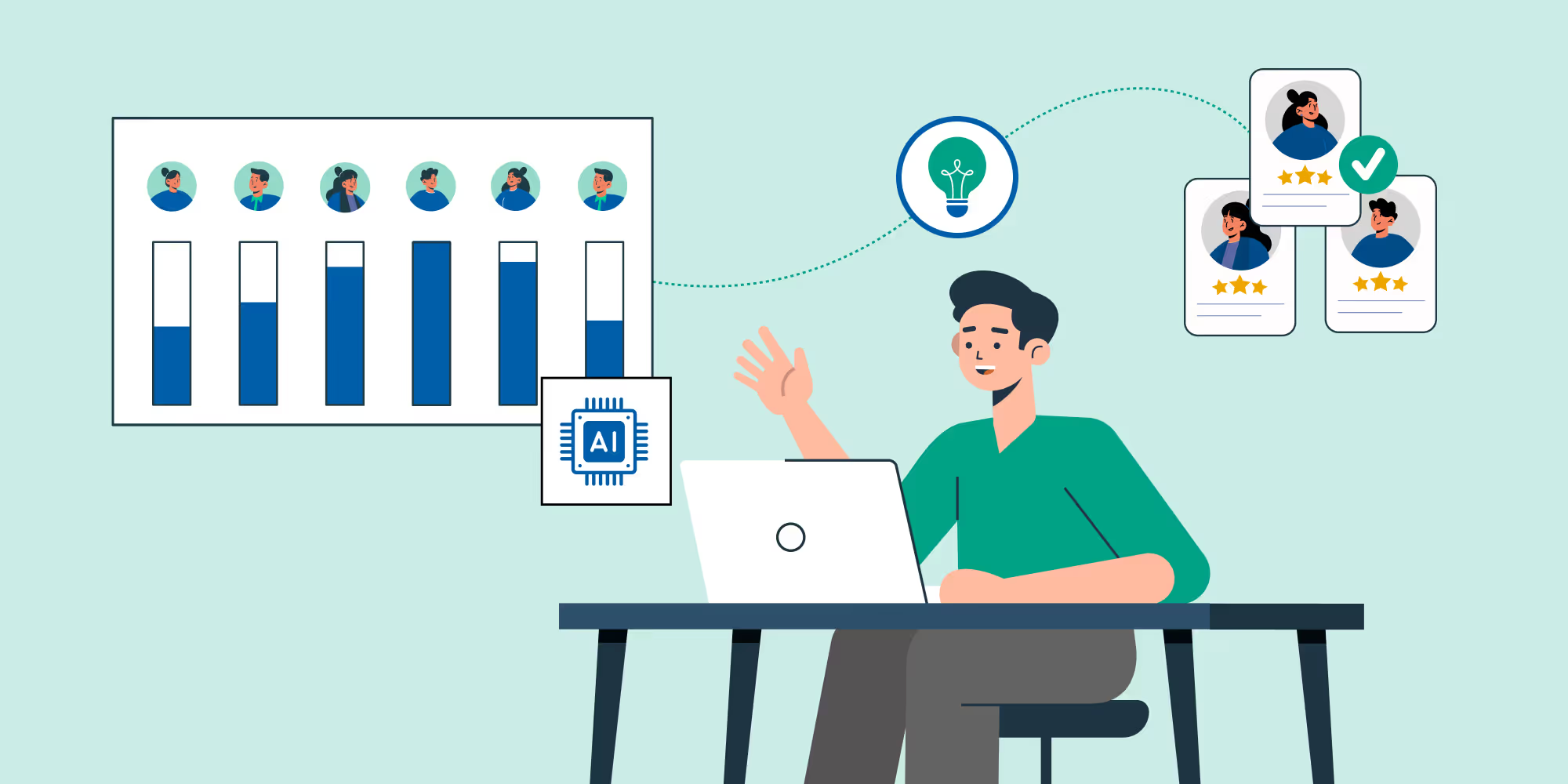
Large enterprises seem to operate on a different playing field.
They have a massive advantage in hiring, market research, and strategic planning.
They can afford to have entire teams dedicated to analyzing interview data, running large-scale candidate screening programs, and extracting every last drop of intelligence from every conversation.
Startups and small-to-medium businesses (SMBs) have to compete for the same top talent and the same customers.
Yet, they are often stuck with manual processes, limited resources, and basic hiring technology.
This creates a significant intelligence gap that has traditionally been difficult to overcome.
The Startup's Dilemma: Big Ambitions, Small Teams
If you are leading or working in a small, growing company, you are constantly juggling a dozen different priorities.
You don't have the luxury of a dedicated market research department or a large HR team with specialized analysts.
Every single interview, whether it's with a potential hire, a new customer, or an industry expert, is incredibly valuable.
These conversations are packed with the insights you need to build a better product and a stronger team.
The problem is that you lack the time and the tools to analyze this data systematically.
The insights get trapped in individual notebooks, forgotten in Slack channels after a meeting, or remain locked in the minds of the few people who were on the call.
You know there is valuable information in those conversations, but you have no efficient way to unlock it, connect it, and turn it into a strategic asset.
You are forced to rely on gut feelings and anecdotal evidence instead of hard data, while your larger competitors are making decisions based on deep, analytical insights.
Leveling the Playing Field with AI Agents
This is where AI agents for small businesses can completely change the game.
Technology provides access to the kind of powerful conversational intelligence that was once the exclusive domain of large corporations.
The same sophisticated AI agents used in enterprises are now accessible and affordable for you.
You can deploy an AI agent to conduct your initial interviews, analyze customer feedback, or screen candidates at a scale that would typically require a dedicated team of five.
The AI agent automates the most time-consuming parts of the process: the data capture and the analysis. It doesn't just record the conversation; it structures it. It identifies key topics, extracts important entities like competitor names, and analyzes sentiment.
This process delivers clean, structured insights directly to you and your team, allowing you to bypass the manual work and get straight to the strategic thinking. It gives you the power of an enterprise analytics team without the enterprise-level headcount.
A Case Study in Efficiency: Startup vs. The Old Way
Imagine two startups competing for the same senior software engineer.
Startup A uses the traditional method. Their two co-founders and lead engineer spend a collective of 15 hours over two weeks conducting initial phone screens with a dozen candidates. That's 15 hours of high-value time pulled away from product development.
Startup B uses an AI-powered platform. They send a link to the same dozen candidates for a 20-minute interview with an AI agent. The AI asks targeted technical questions and assesses problem-solving skills.
The entire screening process is complete in a few days, with zero hours spent by the founding team.
They receive a ranked, data-driven report on all twelve candidates.
They spend their valuable time only on final-round interviews with the top three contenders.
Startup B not only saves time and money but also gets to the best candidate faster, giving them a critical edge.
This is the power of modern startup hiring tech.
A Cost-Effective Model for Smart Growth
You do not need a massive, six-figure budget to start making smarter, data-driven decisions. Modern platforms are designed for scalability and affordability.
You can begin by using an AI agent for a single, critical function, such as screening candidates for your most important open role.
This allows you to see an immediate and tangible return on your investment without a huge upfront commitment.
As your company grows, you can easily expand the use of AI agents across other business functions.
You can use them for customer onboarding interviews, user research for a new feature, or even internal employee feedback sessions.
This cost-effective and modular rollout enables you to benefit from enterprise-level technology that scales with your business.
Solutions like Spectra provide this capability, ensuring interview equity and strategic parity.
It allows you to compete on a more level playing field, making decisions based on deep, data-driven insights, just like the Fortune 500 giants.
Want to scale your hiring intelligence without scaling your team?
Try Spectra and unlock AI-powered interviews built for fast-growing startups.


Large enterprises seem to operate on a different playing field.
They have a massive advantage in hiring, market research, and strategic planning.
They can afford to have entire teams dedicated to analyzing interview data, running large-scale candidate screening programs, and extracting every last drop of intelligence from every conversation.
Startups and small-to-medium businesses (SMBs) have to compete for the same top talent and the same customers.
Yet, they are often stuck with manual processes, limited resources, and basic hiring technology.
This creates a significant intelligence gap that has traditionally been difficult to overcome.
The Startup's Dilemma: Big Ambitions, Small Teams
If you are leading or working in a small, growing company, you are constantly juggling a dozen different priorities.
You don't have the luxury of a dedicated market research department or a large HR team with specialized analysts.
Every single interview, whether it's with a potential hire, a new customer, or an industry expert, is incredibly valuable.
These conversations are packed with the insights you need to build a better product and a stronger team.
The problem is that you lack the time and the tools to analyze this data systematically.
The insights get trapped in individual notebooks, forgotten in Slack channels after a meeting, or remain locked in the minds of the few people who were on the call.
You know there is valuable information in those conversations, but you have no efficient way to unlock it, connect it, and turn it into a strategic asset.
You are forced to rely on gut feelings and anecdotal evidence instead of hard data, while your larger competitors are making decisions based on deep, analytical insights.
Leveling the Playing Field with AI Agents
This is where AI agents for small businesses can completely change the game.
Technology provides access to the kind of powerful conversational intelligence that was once the exclusive domain of large corporations.
The same sophisticated AI agents used in enterprises are now accessible and affordable for you.
You can deploy an AI agent to conduct your initial interviews, analyze customer feedback, or screen candidates at a scale that would typically require a dedicated team of five.
The AI agent automates the most time-consuming parts of the process: the data capture and the analysis. It doesn't just record the conversation; it structures it. It identifies key topics, extracts important entities like competitor names, and analyzes sentiment.
This process delivers clean, structured insights directly to you and your team, allowing you to bypass the manual work and get straight to the strategic thinking. It gives you the power of an enterprise analytics team without the enterprise-level headcount.
A Case Study in Efficiency: Startup vs. The Old Way
Imagine two startups competing for the same senior software engineer.
Startup A uses the traditional method. Their two co-founders and lead engineer spend a collective of 15 hours over two weeks conducting initial phone screens with a dozen candidates. That's 15 hours of high-value time pulled away from product development.
Startup B uses an AI-powered platform. They send a link to the same dozen candidates for a 20-minute interview with an AI agent. The AI asks targeted technical questions and assesses problem-solving skills.
The entire screening process is complete in a few days, with zero hours spent by the founding team.
They receive a ranked, data-driven report on all twelve candidates.
They spend their valuable time only on final-round interviews with the top three contenders.
Startup B not only saves time and money but also gets to the best candidate faster, giving them a critical edge.
This is the power of modern startup hiring tech.
A Cost-Effective Model for Smart Growth
You do not need a massive, six-figure budget to start making smarter, data-driven decisions. Modern platforms are designed for scalability and affordability.
You can begin by using an AI agent for a single, critical function, such as screening candidates for your most important open role.
This allows you to see an immediate and tangible return on your investment without a huge upfront commitment.
As your company grows, you can easily expand the use of AI agents across other business functions.
You can use them for customer onboarding interviews, user research for a new feature, or even internal employee feedback sessions.
This cost-effective and modular rollout enables you to benefit from enterprise-level technology that scales with your business.
Solutions like Spectra provide this capability, ensuring interview equity and strategic parity.
It allows you to compete on a more level playing field, making decisions based on deep, data-driven insights, just like the Fortune 500 giants.
Want to scale your hiring intelligence without scaling your team?
Try Spectra and unlock AI-powered interviews built for fast-growing startups.
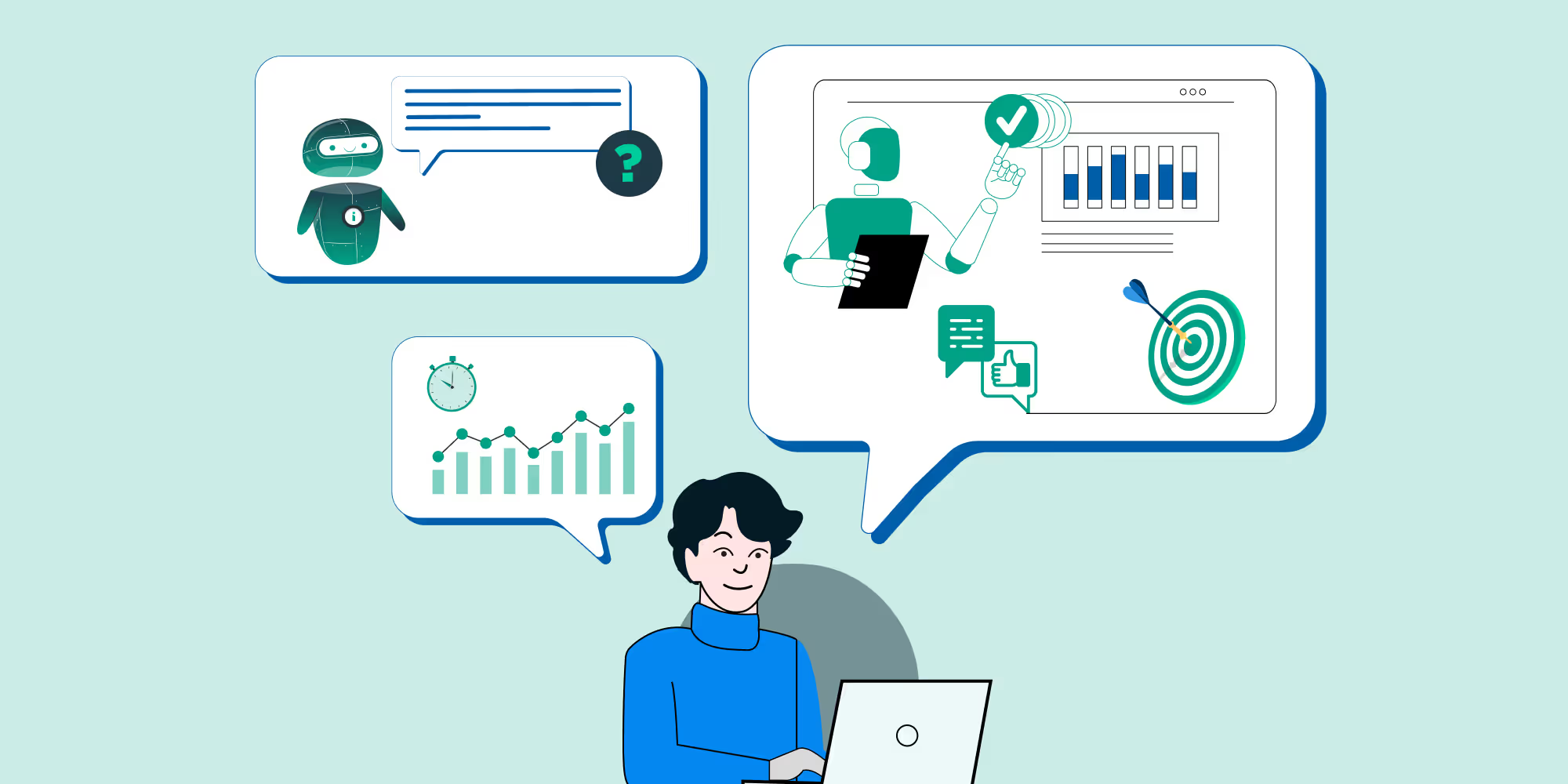
You’ve crafted your resume. Rewritten your LinkedIn bio. Spent an hour Googling “most common interview questions.”
Still feeling a little… unprepared?
Agentic AI-powered mock interviews can give you the much-needed boost of confidence!
These aren’t the robotic scripts you might remember from early job portals. Today’s AI interview practice tools simulate real-world job interviews - with smart follow-up questions, tone analysis, and structured feedback - giving you a safe, judgement-free space to improve and avoid common mistakes.
Let’s get into why taking a mock interview online (especially with an AI agent) before your real one can be beneficial for acing interviews.
1. Interviews are getting tougher and more unpredictable
Hiring isn’t what it used to be.
From behavioral interviews to case studies and technical rounds, today’s job interviews can feel like running a gauntlet.
According to a report, close to two-thirds (64.8%) of employers surveyed reported using skills-based hiring practices for new entry-level hires, with 90% of these employers incorporating it at the interview stage that dig deep into competencies, not just qualifications.
That means prep has to be specific, and tailored to each role.
AI practice interviews help here by adapting questions based on your responses. Instead of generic lists, you get personalized question paths that better mirror how real recruiters think.
2. Real-time feedback that’s actually useful
“Tell me about yourself.”
It seems simple - until you say it out loud and realize you rambled for three minutes without making a point.
AI mock interview tools can pick that up instantly. Many offer real-time feedback on:
- Speech clarity and filler words
- Eye contact and facial expressions (if video-enabled)
- Length and structure of your answers
- Confidence score (based on tone and delivery)
Tools like SpectraSeek take it a step further with video recordings and transcripts of your practice sessions, so you can review, reflect, and fine-tune your performance like a pro.
3. Builds confidence without the pressure
Interview anxiety is real, and practicing with an AI interview prep tool takes the edge off.
You’re not being judged. There’s no awkward silence. You can restart as many times as you like, pause midway, or try different styles.
You build muscle memory for speaking clearly, structuring responses, and staying calm. And when you walk into the real thing? You’ve already done it 10 times in your head.
4. Available anytime, anywhere
Not everyone has access to a mentor or a professional coach. And not everyone has the budget for one.
Whether you’ve got 20 minutes before bed or you’re sneaking in a session during lunch, AI is always ready.
Platforms like Google’s Interview Warmup, Pramp, or more comprehensive solutions like SpectraSeek (which offers AI-led practice with recordings, feedback, and resume scoring) give you flexibility without friction.
5. Helps you tailor responses to the role
Interviewing for a sales role? Expect questions on negotiation, KPIs, and pipeline management.
Applying for a data analyst job? You’ll need crisp answers on SQL, dashboards, and decision-making.
AI mock interview platforms often let you choose the job title or industry you’re preparing for. Tools like SpectraSeek even help you identify resume gaps and adjust how you present your experience during the interview - so your prep isn’t just “general,” but targeted.
6. Tracks progress over time
It’s hard to know if you’re improving - unless you’re keeping score.
The best AI mock interview practice tools show metrics over time:
- How much more concise your answers are
- How your confidence score has changed
- What kinds of questions still trip you up
SpectraSeek, for example, stores your video recordings and transcripts so you can track how your delivery, tone, and structure evolve. And the AI-generated feedback helps you see exactly what to tweak and where.
7. Practice makes prepared, not perfect
We’ve all heard “practice makes perfect.” But that’s not the point of interview prep.
The point is to feel prepared enough to show up as your best self. To answer clearly, think aloud, and connect with the interviewer.
With AI interview practice, you can do exactly that - without burning out.
Job hunting is tough enough.
Between the applications, follow-ups, and imposter syndrome, it’s a full-time job on its own.
But prepping smart with AI mock interviews can make a massive difference. You can work on sharpening your delivery, spotting blind spots, and walking into that interview with quiet confidence.
If you’re serious about landing the job, give yourself that edge.
Want to know what it’s like having a smart, tireless coach in your corner? Try SpectraSeek!
You’ve crafted your resume. Rewritten your LinkedIn bio. Spent an hour Googling “most common interview questions.”
Still feeling a little… unprepared?
Agentic AI-powered mock interviews can give you the much-needed boost of confidence!
These aren’t the robotic scripts you might remember from early job portals. Today’s AI interview practice tools simulate real-world job interviews - with smart follow-up questions, tone analysis, and structured feedback - giving you a safe, judgement-free space to improve and avoid common mistakes.
Let’s get into why taking a mock interview online (especially with an AI agent) before your real one can be beneficial for acing interviews.
1. Interviews are getting tougher and more unpredictable
Hiring isn’t what it used to be.
From behavioral interviews to case studies and technical rounds, today’s job interviews can feel like running a gauntlet.
According to a report, close to two-thirds (64.8%) of employers surveyed reported using skills-based hiring practices for new entry-level hires, with 90% of these employers incorporating it at the interview stage that dig deep into competencies, not just qualifications.
That means prep has to be specific, and tailored to each role.
AI practice interviews help here by adapting questions based on your responses. Instead of generic lists, you get personalized question paths that better mirror how real recruiters think.
2. Real-time feedback that’s actually useful
“Tell me about yourself.”
It seems simple - until you say it out loud and realize you rambled for three minutes without making a point.
AI mock interview tools can pick that up instantly. Many offer real-time feedback on:
- Speech clarity and filler words
- Eye contact and facial expressions (if video-enabled)
- Length and structure of your answers
- Confidence score (based on tone and delivery)
Tools like SpectraSeek take it a step further with video recordings and transcripts of your practice sessions, so you can review, reflect, and fine-tune your performance like a pro.
3. Builds confidence without the pressure
Interview anxiety is real, and practicing with an AI interview prep tool takes the edge off.
You’re not being judged. There’s no awkward silence. You can restart as many times as you like, pause midway, or try different styles.
You build muscle memory for speaking clearly, structuring responses, and staying calm. And when you walk into the real thing? You’ve already done it 10 times in your head.
4. Available anytime, anywhere
Not everyone has access to a mentor or a professional coach. And not everyone has the budget for one.
Whether you’ve got 20 minutes before bed or you’re sneaking in a session during lunch, AI is always ready.
Platforms like Google’s Interview Warmup, Pramp, or more comprehensive solutions like SpectraSeek (which offers AI-led practice with recordings, feedback, and resume scoring) give you flexibility without friction.
5. Helps you tailor responses to the role
Interviewing for a sales role? Expect questions on negotiation, KPIs, and pipeline management.
Applying for a data analyst job? You’ll need crisp answers on SQL, dashboards, and decision-making.
AI mock interview platforms often let you choose the job title or industry you’re preparing for. Tools like SpectraSeek even help you identify resume gaps and adjust how you present your experience during the interview - so your prep isn’t just “general,” but targeted.
6. Tracks progress over time
It’s hard to know if you’re improving - unless you’re keeping score.
The best AI mock interview practice tools show metrics over time:
- How much more concise your answers are
- How your confidence score has changed
- What kinds of questions still trip you up
SpectraSeek, for example, stores your video recordings and transcripts so you can track how your delivery, tone, and structure evolve. And the AI-generated feedback helps you see exactly what to tweak and where.
7. Practice makes prepared, not perfect
We’ve all heard “practice makes perfect.” But that’s not the point of interview prep.
The point is to feel prepared enough to show up as your best self. To answer clearly, think aloud, and connect with the interviewer.
With AI interview practice, you can do exactly that - without burning out.
Job hunting is tough enough.
Between the applications, follow-ups, and imposter syndrome, it’s a full-time job on its own.
But prepping smart with AI mock interviews can make a massive difference. You can work on sharpening your delivery, spotting blind spots, and walking into that interview with quiet confidence.
If you’re serious about landing the job, give yourself that edge.
Want to know what it’s like having a smart, tireless coach in your corner? Try SpectraSeek!

What does an interview really cost your business?
Most leaders calculate the obvious expenses, such as a recruiter's salary or the cost of a job ad. This misses the real story. The actual financial damage comes from the hidden costs buried deep in your hiring process. These are the subtle, corrosive expenses that drain your budget, slow your growth, and quietly sabotage your success.
It's the top engineer pulled from a critical project to sit in yet another first-round screening.
It's the brilliant candidate who walks away because your process was too slow.
And it’s the staggering expense of a bad hire, whose adverse effects on morale and productivity can linger for months.
These aren't just operational headaches; they are significant financial liabilities. Understanding this true hiring cost is the first step toward fixing a broken system.
The Compounding Cost of Wasted Hours
Opportunity cost is the single biggest budget killer in hiring.
Every hour your best people spend in interviews is an hour they aren't generating revenue or building your future.
Consider a senior engineer whose fully loaded cost to the company is $150 per hour.
If they spend just five hours a week on interviews, that’s $750 of high-value engineering time vaporized every week. Over the course of a year, that's $39,000 of lost productivity.
This "scheduling tax" extends across the organization.
The endless email chains to coordinate schedules, the last-minute cancellations, and the time spent writing up repetitive feedback create a constant administrative drag.
This is a direct hit to your bottom line.
Many teams are now turning to agentic AI interviews for the benefits they offer to recruiters and candidates, to reduce this scheduling burden altogether.
Furthermore, the cost of context-switching is immense. When a developer is pulled out of a state of deep work for an interview, it can take them over 20 minutes to regain focus. This constant disruption grinds innovation to a halt.
A delayed hire also means a delayed product launch, which directly translates to delayed revenue and loss of competitive edge.
Beyond the Clock: The High Price of Process Flaws
The financial drain of interview inefficiencies goes far beyond wasted time.
Your hiring process itself is likely leaking money due to inherent human limitations. Unconscious bias, for example, can cause even the best-intentioned interviewers to overlook incredible candidates who don't fit a preconceived mold.
Affinity bias might lead a manager to favor someone from their alma mater, while the halo effect might cause them to overvalue a candidate who is simply a polished speaker.
These process flaws aren't just unfair; they're incredibly expensive.
They lead directly to bad hires. The cost of a bad hire is not limited to lost productivity; it also includes the costs of re-hiring and retraining a replacement, as well as the negative impact on team morale. A single bad hire can poison a team's culture and derail important projects.
Beyond that, a slow or inconsistent process damages your employer brand. In today's market, candidate experience is paramount.
A talented individual who has a poor experience won't just walk away; they'll tell their network. This tarnishes your reputation and makes it more challenging and costly to attract top talent in the future.
The Human Factor: Why Great Interviewers Still Struggle
The problem isn't that your people are bad at interviewing.
The problem is that the traditional interview process is set up for failure. Even your most skilled interviewers are susceptible to systemic issues that lead to poor outcomes.
Interviewer fatigue is a significant factor. After four or five back-to-back interviews, no human can maintain the same level of focus, objectivity, and energy they had at the start of the day.
Decision quality inevitably degrades.
Moreover, most employees are thrown into interviews with little to no formal training. They are expected to be expert evaluators but are rarely given a consistent framework for success.
This leads to different interviewers assessing different attributes, making it impossible to compare candidates on an even playing field.
One manager might prioritize raw technical skills, while another looks for collaborative potential. Without a standardized rubric, your hiring process becomes a game of chance rather than a strategic function.
A Smarter Model: The AI Co-Pilot
This isn’t about replacing human connection. It’s about enhancing it with powerful conversational intelligence.
An AI agent, like the one offered by SpectraHire, acts as the perfect co-pilot for your hiring teams, handling the systematic, data-driven parts of the process so your people can focus on what they do best.
Imagine an AI interview that handles the entire initial screening phase.
The AI Agent consistently asks role-specific questions, assesses core skills against a clear rubric, and delivers an objective, data-driven report.
This frees up your human interviewers to focus on high-level evaluation, deep cultural fit, and building genuine relationships with a shortlist of top contenders.
The AI agent handles the repetitive, fatiguing tasks while your team makes the final, critical decisions. This model significantly reduces the actual hiring cost by enhancing your existing team's capabilities and making your process more reliable.
From Hidden Costs to Hard ROI: A Practical Guide
The AI ROI is both immediate and measurable.
Let's revisit our example. A key engineering role is open, and your team collectively spends 40 hours on initial screenings. At a blended rate of $120 per hour for your team, that’s $4,800 in opportunity cost that can be completely eliminated by an AI agent.
That's a hard-dollar saving on just one role.
You also drastically reduce your time-to-fill.
By automating the top of the funnel, you can move qualified candidates to the final stages in days, not weeks. This means your new hire starts contributing to your goals sooner, directly accelerating your business outcomes.
A platform like SpectraHire provides the tools to implement this co-pilot model. It allows companies to design and deploy intelligent, automated interview agents that handle the heavy lifting of screening, freeing up human teams to focus on strategic decision-making.
To implement this effectively, start small.
- Pilot an AI-powered screening process for one high-volume or critical role.
- Define your success metrics upfront—track time saved, cost-per-hire reduction, and the quality of candidates who make it to the final round.
- Involve your hiring managers in designing the interview template to ensure team fit.
You will quickly see how this co-pilot approach transforms your hiring from a costly, inefficient chore into a streamlined, strategic advantage.
Ready to cut interview costs without compromising on quality?
Try SpectraHire and let an AI co-pilot streamline your screening process—so your team can focus on hiring smarter and faster.
What does an interview really cost your business?
Most leaders calculate the obvious expenses, such as a recruiter's salary or the cost of a job ad. This misses the real story. The actual financial damage comes from the hidden costs buried deep in your hiring process. These are the subtle, corrosive expenses that drain your budget, slow your growth, and quietly sabotage your success.
It's the top engineer pulled from a critical project to sit in yet another first-round screening.
It's the brilliant candidate who walks away because your process was too slow.
And it’s the staggering expense of a bad hire, whose adverse effects on morale and productivity can linger for months.
These aren't just operational headaches; they are significant financial liabilities. Understanding this true hiring cost is the first step toward fixing a broken system.
The Compounding Cost of Wasted Hours
Opportunity cost is the single biggest budget killer in hiring.
Every hour your best people spend in interviews is an hour they aren't generating revenue or building your future.
Consider a senior engineer whose fully loaded cost to the company is $150 per hour.
If they spend just five hours a week on interviews, that’s $750 of high-value engineering time vaporized every week. Over the course of a year, that's $39,000 of lost productivity.
This "scheduling tax" extends across the organization.
The endless email chains to coordinate schedules, the last-minute cancellations, and the time spent writing up repetitive feedback create a constant administrative drag.
This is a direct hit to your bottom line.
Many teams are now turning to agentic AI interviews for the benefits they offer to recruiters and candidates, to reduce this scheduling burden altogether.
Furthermore, the cost of context-switching is immense. When a developer is pulled out of a state of deep work for an interview, it can take them over 20 minutes to regain focus. This constant disruption grinds innovation to a halt.
A delayed hire also means a delayed product launch, which directly translates to delayed revenue and loss of competitive edge.
Beyond the Clock: The High Price of Process Flaws
The financial drain of interview inefficiencies goes far beyond wasted time.
Your hiring process itself is likely leaking money due to inherent human limitations. Unconscious bias, for example, can cause even the best-intentioned interviewers to overlook incredible candidates who don't fit a preconceived mold.
Affinity bias might lead a manager to favor someone from their alma mater, while the halo effect might cause them to overvalue a candidate who is simply a polished speaker.
These process flaws aren't just unfair; they're incredibly expensive.
They lead directly to bad hires. The cost of a bad hire is not limited to lost productivity; it also includes the costs of re-hiring and retraining a replacement, as well as the negative impact on team morale. A single bad hire can poison a team's culture and derail important projects.
Beyond that, a slow or inconsistent process damages your employer brand. In today's market, candidate experience is paramount.
A talented individual who has a poor experience won't just walk away; they'll tell their network. This tarnishes your reputation and makes it more challenging and costly to attract top talent in the future.
The Human Factor: Why Great Interviewers Still Struggle
The problem isn't that your people are bad at interviewing.
The problem is that the traditional interview process is set up for failure. Even your most skilled interviewers are susceptible to systemic issues that lead to poor outcomes.
Interviewer fatigue is a significant factor. After four or five back-to-back interviews, no human can maintain the same level of focus, objectivity, and energy they had at the start of the day.
Decision quality inevitably degrades.
Moreover, most employees are thrown into interviews with little to no formal training. They are expected to be expert evaluators but are rarely given a consistent framework for success.
This leads to different interviewers assessing different attributes, making it impossible to compare candidates on an even playing field.
One manager might prioritize raw technical skills, while another looks for collaborative potential. Without a standardized rubric, your hiring process becomes a game of chance rather than a strategic function.
A Smarter Model: The AI Co-Pilot
This isn’t about replacing human connection. It’s about enhancing it with powerful conversational intelligence.
An AI agent, like the one offered by SpectraHire, acts as the perfect co-pilot for your hiring teams, handling the systematic, data-driven parts of the process so your people can focus on what they do best.
Imagine an AI interview that handles the entire initial screening phase.
The AI Agent consistently asks role-specific questions, assesses core skills against a clear rubric, and delivers an objective, data-driven report.
This frees up your human interviewers to focus on high-level evaluation, deep cultural fit, and building genuine relationships with a shortlist of top contenders.
The AI agent handles the repetitive, fatiguing tasks while your team makes the final, critical decisions. This model significantly reduces the actual hiring cost by enhancing your existing team's capabilities and making your process more reliable.
From Hidden Costs to Hard ROI: A Practical Guide
The AI ROI is both immediate and measurable.
Let's revisit our example. A key engineering role is open, and your team collectively spends 40 hours on initial screenings. At a blended rate of $120 per hour for your team, that’s $4,800 in opportunity cost that can be completely eliminated by an AI agent.
That's a hard-dollar saving on just one role.
You also drastically reduce your time-to-fill.
By automating the top of the funnel, you can move qualified candidates to the final stages in days, not weeks. This means your new hire starts contributing to your goals sooner, directly accelerating your business outcomes.
A platform like SpectraHire provides the tools to implement this co-pilot model. It allows companies to design and deploy intelligent, automated interview agents that handle the heavy lifting of screening, freeing up human teams to focus on strategic decision-making.
To implement this effectively, start small.
- Pilot an AI-powered screening process for one high-volume or critical role.
- Define your success metrics upfront—track time saved, cost-per-hire reduction, and the quality of candidates who make it to the final round.
- Involve your hiring managers in designing the interview template to ensure team fit.
You will quickly see how this co-pilot approach transforms your hiring from a costly, inefficient chore into a streamlined, strategic advantage.
Ready to cut interview costs without compromising on quality?
Try SpectraHire and let an AI co-pilot streamline your screening process—so your team can focus on hiring smarter and faster.
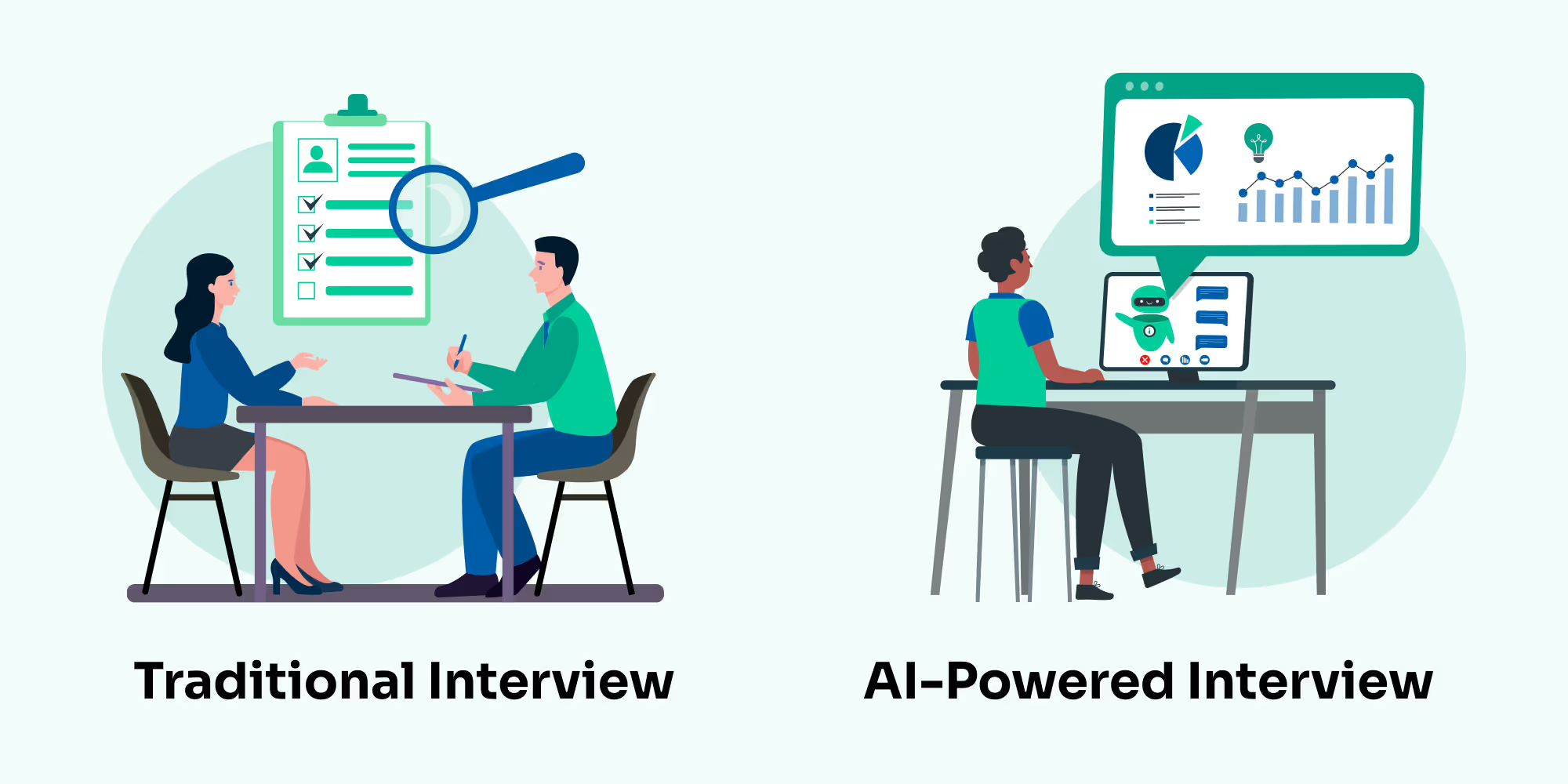
When was the last time you genuinely enjoyed filling out a long survey or a tedious form? Probably never.
Forms and surveys, although traditionally popular, often lack the depth, context, and human touch that meaningful interactions require.
Smart teams have noticed - and they're rapidly switching to AI-powered interview agents to revolutionize assessments, market research, and qualitative insights.
Let’s explore why businesses are making this shift and how it can profoundly enhance your team's efficiency and outcomes.
Forms are out, conversations are in
Traditional methods like surveys and static forms can be limiting. Respondents often lose interest quickly, leading to incomplete or inaccurate data. AI interview agents, however, leverage conversational intelligence, making interactions intuitive, engaging, and incredibly insightful.
According to Gartner, the number of organizations adopting conversational AI agents for customer interactions and internal assessments have drastically increased.
By 2029, agentic AI is expected to autonomously resolve 80% of common customer service issues without human intervention, leading to a 30% reduction in operational costs. Gartner further predicts that conversational AI deployments within contact centers will reduce agent labor costs by $80 billion by 2026.
Conversational AI can automate all or part of a customer interaction through voicebots or chatbots across both voice and digital channels, with transformational benefits for customer service and support organizations within two years.
Automating full interactions can lead to significant cost savings, and even partial automation, such as identifying a customer's name and reason for calling, could reduce interaction time by up to a third for human agents.
AI agents for interviews is not just trendy - it's highly impactful
We’ve all rolled our eyes at another “quick” form that turns into a scroll marathon. Turns out, the better way to get real answers? Just talk to people (or rather, let your AI agent do it).
Personalization that engages and retains attention
Traditional forms and surveys adopt a one-size-fits-all approach, often neglecting individual preferences and nuances. AI-powered interview agents, however, dynamically adapt questions based on real-time interactions and prior responses.
This not only keeps respondents engaged but also ensures higher-quality insights and deeper context, thanks to how AI agents personalize interviews.
Real-time insights for agile decision-making
With static forms, insights usually arrive long after the information is gathered, limiting actionable intelligence. AI-driven interviews, on the other hand, offer real-time data collection and analysis.
This instant feedback loop empowers teams to quickly identify trends, pivot strategies, and make informed decisions with agility and confidence, giving businesses a competitive advantage.
Enhanced scalability without compromising quality
Scaling traditional surveys and forms can be cumbersome, costly, and often results in diminishing returns on data quality. AI-powered interview agents effortlessly scale to engage thousands of respondents simultaneously, consistently maintaining interaction quality.
Businesses can rapidly expand their data collection efforts without substantial resource investment, achieving broader reach and deeper insights.
Uncover hidden patterns with advanced analytics
AI interview agents aren't just adept at conversation - they excel at data interpretation. Leveraging advanced natural language processing (NLP) and machine learning algorithms, these agents analyze nuanced responses, extracting sentiment, emotions, and subtle contextual cues often overlooked in conventional methods.
This capability enables organizations to uncover hidden patterns, anticipate customer needs, and predict future trends with remarkable accuracy.
Elevating user experience and brand perception
A seamless and engaging interaction significantly enhances user experience, directly impacting brand perception. AI conversational agents create natural, enjoyable interactions, reflecting positively on the brand and fostering long-term loyalty.
Teams adopting conversational AI find that users not only provide richer data but also view the company as innovative, empathetic, and customer-centric.
Getting started on transitioning from forms to AI interviews
Switching from traditional methods to AI-powered conversational agents may sound daunting, but it doesn't have to be.
Begin by identifying critical areas where deeper insights are essential. Pilot AI interviews for internal assessments or targeted customer segments. Measure the improvements in engagement, response quality, and insights gained, and iterate quickly.
With incremental adoption, teams can smoothly transition to this transformative method of collecting and utilizing data.
Want to position your team for smarter decisions, deeper insights, and sustained growth? Let’s connect!
When was the last time you genuinely enjoyed filling out a long survey or a tedious form? Probably never.
Forms and surveys, although traditionally popular, often lack the depth, context, and human touch that meaningful interactions require.
Smart teams have noticed - and they're rapidly switching to AI-powered interview agents to revolutionize assessments, market research, and qualitative insights.
Let’s explore why businesses are making this shift and how it can profoundly enhance your team's efficiency and outcomes.
Forms are out, conversations are in
Traditional methods like surveys and static forms can be limiting. Respondents often lose interest quickly, leading to incomplete or inaccurate data. AI interview agents, however, leverage conversational intelligence, making interactions intuitive, engaging, and incredibly insightful.
According to Gartner, the number of organizations adopting conversational AI agents for customer interactions and internal assessments have drastically increased.
By 2029, agentic AI is expected to autonomously resolve 80% of common customer service issues without human intervention, leading to a 30% reduction in operational costs. Gartner further predicts that conversational AI deployments within contact centers will reduce agent labor costs by $80 billion by 2026.
Conversational AI can automate all or part of a customer interaction through voicebots or chatbots across both voice and digital channels, with transformational benefits for customer service and support organizations within two years.
Automating full interactions can lead to significant cost savings, and even partial automation, such as identifying a customer's name and reason for calling, could reduce interaction time by up to a third for human agents.
AI agents for interviews is not just trendy - it's highly impactful
We’ve all rolled our eyes at another “quick” form that turns into a scroll marathon. Turns out, the better way to get real answers? Just talk to people (or rather, let your AI agent do it).
Personalization that engages and retains attention
Traditional forms and surveys adopt a one-size-fits-all approach, often neglecting individual preferences and nuances. AI-powered interview agents, however, dynamically adapt questions based on real-time interactions and prior responses.
This not only keeps respondents engaged but also ensures higher-quality insights and deeper context, thanks to how AI agents personalize interviews.
Real-time insights for agile decision-making
With static forms, insights usually arrive long after the information is gathered, limiting actionable intelligence. AI-driven interviews, on the other hand, offer real-time data collection and analysis.
This instant feedback loop empowers teams to quickly identify trends, pivot strategies, and make informed decisions with agility and confidence, giving businesses a competitive advantage.
Enhanced scalability without compromising quality
Scaling traditional surveys and forms can be cumbersome, costly, and often results in diminishing returns on data quality. AI-powered interview agents effortlessly scale to engage thousands of respondents simultaneously, consistently maintaining interaction quality.
Businesses can rapidly expand their data collection efforts without substantial resource investment, achieving broader reach and deeper insights.
Uncover hidden patterns with advanced analytics
AI interview agents aren't just adept at conversation - they excel at data interpretation. Leveraging advanced natural language processing (NLP) and machine learning algorithms, these agents analyze nuanced responses, extracting sentiment, emotions, and subtle contextual cues often overlooked in conventional methods.
This capability enables organizations to uncover hidden patterns, anticipate customer needs, and predict future trends with remarkable accuracy.
Elevating user experience and brand perception
A seamless and engaging interaction significantly enhances user experience, directly impacting brand perception. AI conversational agents create natural, enjoyable interactions, reflecting positively on the brand and fostering long-term loyalty.
Teams adopting conversational AI find that users not only provide richer data but also view the company as innovative, empathetic, and customer-centric.
Getting started on transitioning from forms to AI interviews
Switching from traditional methods to AI-powered conversational agents may sound daunting, but it doesn't have to be.
Begin by identifying critical areas where deeper insights are essential. Pilot AI interviews for internal assessments or targeted customer segments. Measure the improvements in engagement, response quality, and insights gained, and iterate quickly.
With incremental adoption, teams can smoothly transition to this transformative method of collecting and utilizing data.
Want to position your team for smarter decisions, deeper insights, and sustained growth? Let’s connect!
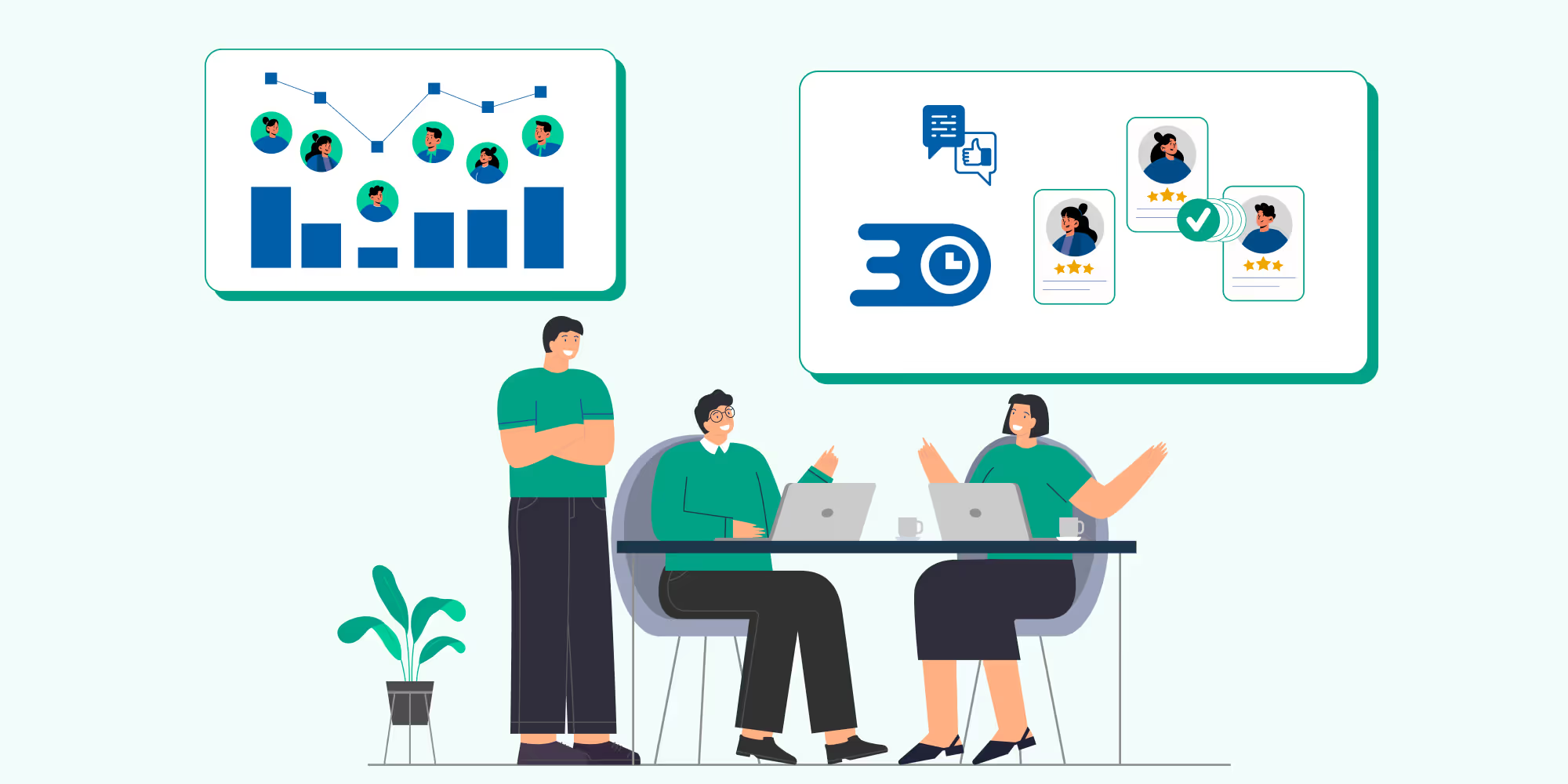
If you're still manually screening CVs, it's probably time for an upgrade. Because let's face it, hiring today isn't what it used to be.
The roles are evolving, the volume is exploding, and candidates expect a five-star experience. Meanwhile, your hiring team is juggling a dozen roles, 200+ applications, and a calendar full of interviews.
The solution? A recruitment-focused AI agent - your modern-day hiring copilot.
But how do you know if you're ready to bring one on board? Here's a practical checklist for hiring teams wondering if it's time to make the leap from traditional tools to AI agents in the recruitment process.
1. You're drowning in resumes, but still can't find "the one."
Applications are rolling in, but shortlisting feels like finding a needle in a haystack. A recruitment-focused AI agent doesn't just scan for keywords. It understands intent, matches against role-specific criteria, and highlights candidates who actually fit, not just those who claim to do so.
2. Your team is stuck in a loop of repetitive screening calls.
If you're asking "Tell me about yourself" for the hundredth time this week, you're not alone. AI agents can help automate the first round of interviews by asking the right questions, adapting follow-ups in real-time, and providing structured insights that you can actually use.
3. Time-to-hire is dragging, and top talent is slipping away.
Delayed decisions = lost candidates. An intelligent AI copilot for recruiters keeps things moving by instantly assessing, filtering, and routing the right candidates to the right people, so you don't miss out on high-quality talent.
4. Your team can't agree on what a "great candidate" looks like.
Hiring shouldn't depend on who interviews first (or who had more coffee). With an AI agent, interviews become standardized and unbiased, so you get consistent data across every candidate, every time.
5. Interview feedback disappears into thin air.
Or worse, it's scattered across email threads, Slack messages, and sticky notes. AI agents collect, summarize, and organize feedback instantly. Everyone stays on the same page, and decisions are made more efficiently.
6. You're hiring across different functions, but can't be everywhere at once.
You've got sales, tech, support, and marketing roles to fill, but only one hiring team. AI agents for hiring can be tailored to each role and run interviews in parallel, at scale. It's like having a whole team of specialists without increasing headcount.
7. You want to reduce bias, but don't know where to begin.
Everyone talks about fair hiring. But what does that look like? An AI copilot for recruiters helps level the playing field by scoring responses consistently and reducing unconscious bias in the early stages.
8. Candidates are ghosting you mid-process.
Lengthy delays and unclear communication can turn people off. An AI agent can instantly follow up with personalized updates, keep candidates in the loop, and ensure they know what to expect next, without you lifting a finger. It's a win for both the recruitment team and candidates.
9. Your hiring team is spending more time scheduling than assessing.
Coordinating calendars, chasing availability, sending reminders, and so on - it'll become a full-time job if you let it. AI recruitment tools with conversational intelligence can take over all of that. They schedule interviews, send nudges, and even reschedule when things change—no email tennis required.
10. Your candidate experience doesn't reflect your employer brand.
You've got a slick website and a strong EVP, but what about your hiring process? Still running on Google Forms. A conversational AI agent for hiring teams gives candidates an innovative, interactive, and respectful experience. It reflects your tech-savvy culture and leaves a lasting impression, even on those who may not be hired.
So, are you ready to upgrade?
If you nodded along to more than a few of these, it's time to meet your new hiring teammate: the AI recruitment agent.
Rather than replacing humans with AI, give your team a capable, tireless assistant who works 24/7 - screening, interviewing, and delivering rich candidate insights at speed.
Because hiring will always be human. But it doesn't have to be manual.
If you're still manually screening CVs, it's probably time for an upgrade. Because let's face it, hiring today isn't what it used to be.
The roles are evolving, the volume is exploding, and candidates expect a five-star experience. Meanwhile, your hiring team is juggling a dozen roles, 200+ applications, and a calendar full of interviews.
The solution? A recruitment-focused AI agent - your modern-day hiring copilot.
But how do you know if you're ready to bring one on board? Here's a practical checklist for hiring teams wondering if it's time to make the leap from traditional tools to AI agents in the recruitment process.
1. You're drowning in resumes, but still can't find "the one."
Applications are rolling in, but shortlisting feels like finding a needle in a haystack. A recruitment-focused AI agent doesn't just scan for keywords. It understands intent, matches against role-specific criteria, and highlights candidates who actually fit, not just those who claim to do so.
2. Your team is stuck in a loop of repetitive screening calls.
If you're asking "Tell me about yourself" for the hundredth time this week, you're not alone. AI agents can help automate the first round of interviews by asking the right questions, adapting follow-ups in real-time, and providing structured insights that you can actually use.
3. Time-to-hire is dragging, and top talent is slipping away.
Delayed decisions = lost candidates. An intelligent AI copilot for recruiters keeps things moving by instantly assessing, filtering, and routing the right candidates to the right people, so you don't miss out on high-quality talent.
4. Your team can't agree on what a "great candidate" looks like.
Hiring shouldn't depend on who interviews first (or who had more coffee). With an AI agent, interviews become standardized and unbiased, so you get consistent data across every candidate, every time.
5. Interview feedback disappears into thin air.
Or worse, it's scattered across email threads, Slack messages, and sticky notes. AI agents collect, summarize, and organize feedback instantly. Everyone stays on the same page, and decisions are made more efficiently.
6. You're hiring across different functions, but can't be everywhere at once.
You've got sales, tech, support, and marketing roles to fill, but only one hiring team. AI agents for hiring can be tailored to each role and run interviews in parallel, at scale. It's like having a whole team of specialists without increasing headcount.
7. You want to reduce bias, but don't know where to begin.
Everyone talks about fair hiring. But what does that look like? An AI copilot for recruiters helps level the playing field by scoring responses consistently and reducing unconscious bias in the early stages.
8. Candidates are ghosting you mid-process.
Lengthy delays and unclear communication can turn people off. An AI agent can instantly follow up with personalized updates, keep candidates in the loop, and ensure they know what to expect next, without you lifting a finger. It's a win for both the recruitment team and candidates.
9. Your hiring team is spending more time scheduling than assessing.
Coordinating calendars, chasing availability, sending reminders, and so on - it'll become a full-time job if you let it. AI recruitment tools with conversational intelligence can take over all of that. They schedule interviews, send nudges, and even reschedule when things change—no email tennis required.
10. Your candidate experience doesn't reflect your employer brand.
You've got a slick website and a strong EVP, but what about your hiring process? Still running on Google Forms. A conversational AI agent for hiring teams gives candidates an innovative, interactive, and respectful experience. It reflects your tech-savvy culture and leaves a lasting impression, even on those who may not be hired.
So, are you ready to upgrade?
If you nodded along to more than a few of these, it's time to meet your new hiring teammate: the AI recruitment agent.
Rather than replacing humans with AI, give your team a capable, tireless assistant who works 24/7 - screening, interviewing, and delivering rich candidate insights at speed.
Because hiring will always be human. But it doesn't have to be manual.
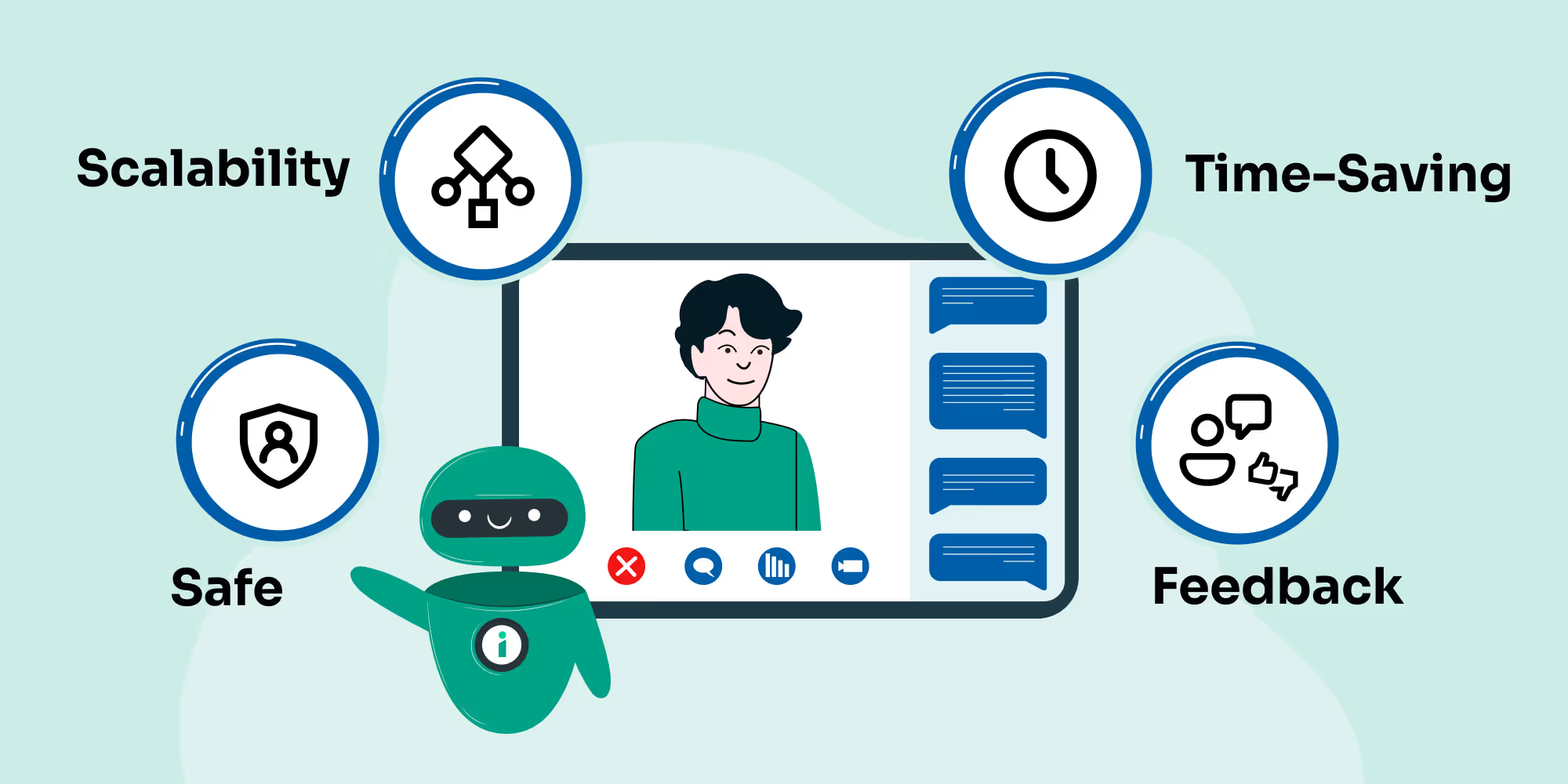
Feedback is essential in the workplace… but also complicated. While constructive criticism is crucial for growth, many employees fear it.
Managers, too, often struggle with delivering it effectively. But what if you could get honest, unbiased, and actionable feedback without judgment, awkwardness, or fear?
That’s exactly what internal coaching via AI interview agents makes possible.
Why traditional coaching will benefit from an upgrade
Coaching, when done right, transforms performance. But in reality, most organizations face two key challenges:
- Inconsistency in delivery - Not all managers are great coaches. Some over-criticize; others avoid giving feedback altogether.
- Feedback anxiety - Employees often hesitate to open up in real-time sessions due to fear of judgment, bias, or repercussions.
Traditional coaching methods, while valuable, often lack the data, consistency, and neutrality needed to create psychological safety. That’s where agent-based video interviews come into play.
Why AI interview agents are a new and improved way to coach internally
Imagine a tool that not only listens and evaluates but also learns from every interaction. Welcome to the world of interview agents powered by AI.
These are not your standard bots. They’re advanced conversational AI for interviews, trained on domain-specific data to ask the right questions, capture nuanced responses, and offer real-time qualitative feedback - without making the employee feel "watched."
Here’s what makes this shift so powerful:
Safe environment - Employees are more candid with AI. A study by Oracle and Workplace Intelligence found that 82% of people believe robots can support their mental health better than humans.
Scalability - An AI interview agent can run hundreds of coaching sessions simultaneously, something no team of human coaches can manage.
Consistency - No human bias, no bad day moods. Just clear, data-backed feedback.
This is where agentic AI-powered interviews are making things easier, not just in hiring but in employee skill development too.
How internal coaching works using agentic AI
Here’s a simple workflow,
Customized AI agent creation - Enterprises build custom AI agents for qualitative insights based on role, level, and goals.
Automated video interview sessions - Employees engage in automated video interview tools designed for coaching, not evaluation.
Conversational intelligence in action - The agent uses conversational intelligence to interpret tone, context, and sentiment, producing a feedback report.
Actionable insights - Employees get instant feedback on communication skills, confidence, clarity, and knowledge gaps, no human filter.
This is agentic AI for human conversations powered by conversational intelligence at its best.
What are the real benefits of adopting AI agents for internal interviews?
No fear feedback - Employees respond more openly to machines than managers when it comes to sensitive performance topics.
Time-saving for leaders - Coaching isn’t scalable when it depends on people. AI agents scale it effortlessly.
Data-backed coaching - Employees can track their progress across sessions with tangible data, something a manager might miss.
In fact, there are use cases for AI interview agents across the enterprise
Leadership grooming - Coach mid-level managers on situational responses.
Sales enablement - Run pitch practice sessions with real-time conversational feedback.
Customer support - Train teams to handle difficult conversations with empathy and clarity.
It’s time to coach differently. And it starts with the right questions - asked by the right agents.
Ready to see this in action for your team? Let’s talk.
Feedback is essential in the workplace… but also complicated. While constructive criticism is crucial for growth, many employees fear it.
Managers, too, often struggle with delivering it effectively. But what if you could get honest, unbiased, and actionable feedback without judgment, awkwardness, or fear?
That’s exactly what internal coaching via AI interview agents makes possible.
Why traditional coaching will benefit from an upgrade
Coaching, when done right, transforms performance. But in reality, most organizations face two key challenges:
- Inconsistency in delivery - Not all managers are great coaches. Some over-criticize; others avoid giving feedback altogether.
- Feedback anxiety - Employees often hesitate to open up in real-time sessions due to fear of judgment, bias, or repercussions.
Traditional coaching methods, while valuable, often lack the data, consistency, and neutrality needed to create psychological safety. That’s where agent-based video interviews come into play.
Why AI interview agents are a new and improved way to coach internally
Imagine a tool that not only listens and evaluates but also learns from every interaction. Welcome to the world of interview agents powered by AI.
These are not your standard bots. They’re advanced conversational AI for interviews, trained on domain-specific data to ask the right questions, capture nuanced responses, and offer real-time qualitative feedback - without making the employee feel "watched."
Here’s what makes this shift so powerful:
Safe environment - Employees are more candid with AI. A study by Oracle and Workplace Intelligence found that 82% of people believe robots can support their mental health better than humans.
Scalability - An AI interview agent can run hundreds of coaching sessions simultaneously, something no team of human coaches can manage.
Consistency - No human bias, no bad day moods. Just clear, data-backed feedback.
This is where agentic AI-powered interviews are making things easier, not just in hiring but in employee skill development too.
How internal coaching works using agentic AI
Here’s a simple workflow,
Customized AI agent creation - Enterprises build custom AI agents for qualitative insights based on role, level, and goals.
Automated video interview sessions - Employees engage in automated video interview tools designed for coaching, not evaluation.
Conversational intelligence in action - The agent uses conversational intelligence to interpret tone, context, and sentiment, producing a feedback report.
Actionable insights - Employees get instant feedback on communication skills, confidence, clarity, and knowledge gaps, no human filter.
This is agentic AI for human conversations powered by conversational intelligence at its best.
What are the real benefits of adopting AI agents for internal interviews?
No fear feedback - Employees respond more openly to machines than managers when it comes to sensitive performance topics.
Time-saving for leaders - Coaching isn’t scalable when it depends on people. AI agents scale it effortlessly.
Data-backed coaching - Employees can track their progress across sessions with tangible data, something a manager might miss.
In fact, there are use cases for AI interview agents across the enterprise
Leadership grooming - Coach mid-level managers on situational responses.
Sales enablement - Run pitch practice sessions with real-time conversational feedback.
Customer support - Train teams to handle difficult conversations with empathy and clarity.
It’s time to coach differently. And it starts with the right questions - asked by the right agents.
Ready to see this in action for your team? Let’s talk.
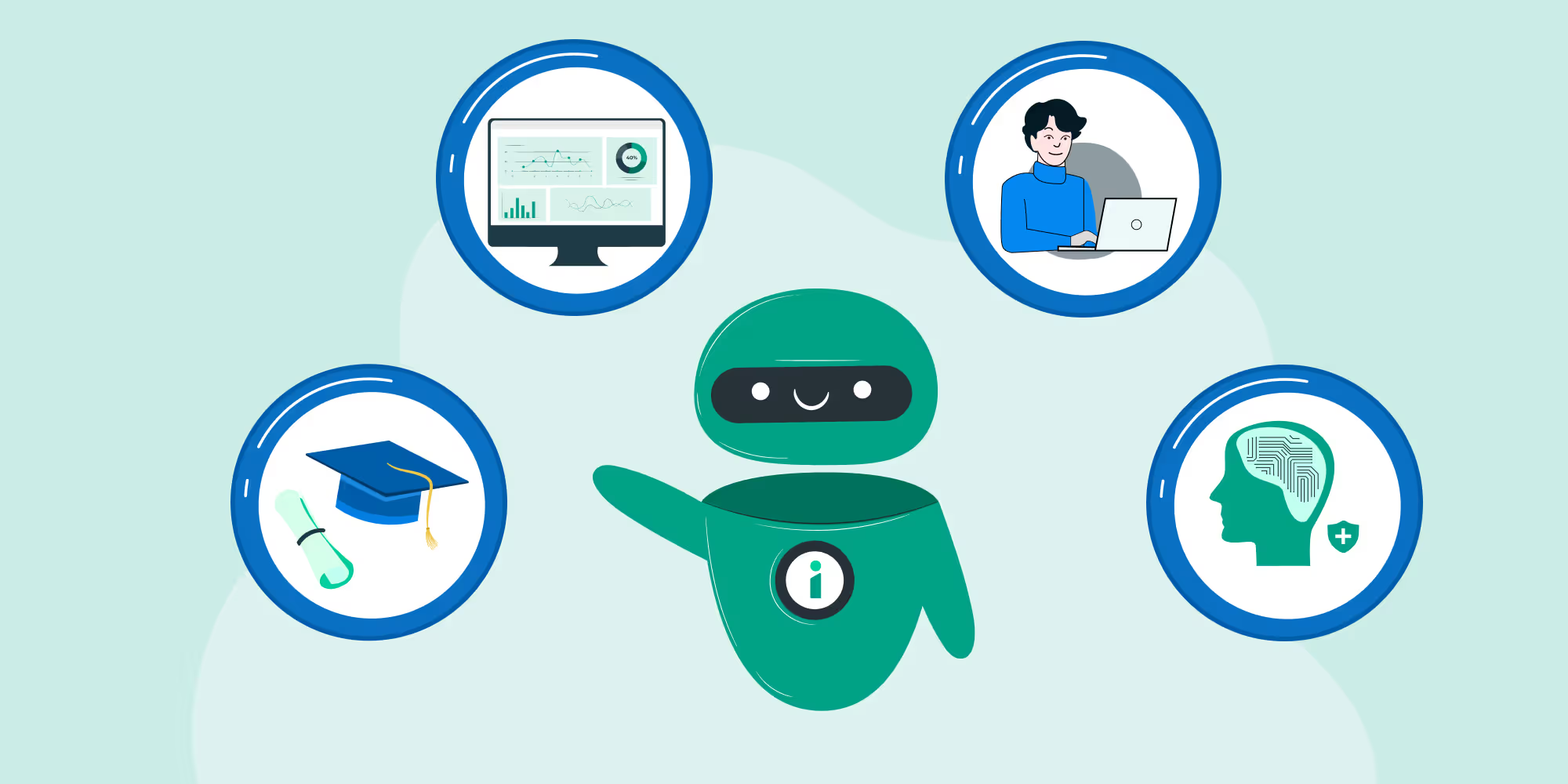
When you hear “AI interviews,” your brain probably goes straight to recruitment and HR tech. Makes sense - after all, AI interview agents are making waves in recruiting. But recruitment is just the tip of the iceberg.
AI Agent-driven interviews are extending far beyond hiring into sectors such as education, research, compliance, and even mental health. Powered by platforms like Spectra - a modular AI interview agent platform for assessments, hiring, research, and insights - these use cases are proving that intelligent, conversational technology is more than just a hiring hack.
Here are 10 areas where agentic AI-driven interviews are elevating business outcomes.
1. Smart assessments in EdTech
Imagine a classroom without an educator handing out tests, but still full of feedback. That’s where agent-based video interviews step in.
In education, AI agents are being used to assess students’ problem-solving, communication, and domain expertise. It’s not just automated quizzes, it’s real-time conversation with an AI interview agent, simulating oral exams and giving instant, personalized feedback.
This is one of the best things to happen to EdTech platforms, as AI agents offer scale and structure, without sacrificing human nuance.
2. Conversational market research
Traditional surveys can’t always read between the lines, but custom AI agents for qualitative insights can.
Instead of static questions, brands are deploying AI agents to conduct one-on-one interviews with consumers. These conversational AI for interviews tools can pick up emotional cues, ask follow-up questions, and surface trends faster than a research assistant could when dealing with a large set of responders.
The use of agentic AI for human conversations provides brands with a rich, nuanced understanding of customer sentiment, which is ideal for agile product development or messaging pivots.
3. Compliance checks made conversational
No one likes audits. But interview agents powered by AI are making them less painful and a lot more consistent.
These AI agents can automate oversight as they ask standardized questions, record answers, flag anomalies, and generate reports - all while ensuring a stress-free experience for employees. It’s particularly powerful in heavily regulated industries where routine checks are critical.
4. Exit interviews that yield insights
Traditional exit interviews are hit or miss.
People often don’t speak freely to HR… but they can be more candid with an unbiased, non-judgmental virtual interview agent. With custom AI agents for enterprises, companies can collect structured, anonymized data at scale, spotting patterns in attrition before it’s too late.
Additionally, this fosters a rich feedback loop that informs more effective employee retention strategies.
5. Job interview prep at scale
Not everyone has access to a great career coach. But what if they had an AI-powered interview coach available 24/7?
That’s precisely what tools like SpectraSeek offer. Job seekers use this AI mock interview platform to practice real-life interview scenarios, get real-time feedback, and boost their confidence, all without another human in the room. The job prep AI agent also simulates varied roles and difficulty levels.
It’s ideal for first-time applicants, career switchers, or anyone prepping for their next big move.
6. Mental health check-ins without stigma
Burnout is real, but not everyone feels safe opening up at work. That’s where AI agents for human conversations are making a quiet difference.
These conversational agents are now being tested as wellness check-in tools. They can ask questions, assess stress levels through tone and word choice, and guide users toward resources—all confidentially.
For HR teams, it’s a compassionate, scalable approach to emotional well-being.
7. Performance reviews reinvented
Annual reviews often suffer from unconscious bias, inconsistency, and lack of clarity.
With an AI agent with conversational intelligence that “understands” nuance, teams can gather feedback from multiple peers, subordinates, and managers using standardized formats, all handled by autonomous AI interview agents.
The result will be more precise and fairer evaluations that accurately reflect real performance.
8. Customer service roleplay and training
How do you train a support team to handle angry customers, tricky objections, or sensitive escalations?
Enter AI interview simulators, which can roleplay high-pressure customer service situations. Staff can practice, fail, learn, and repeat, without any real-world fallout.
The system functions as a personal AI interview assistant, providing immediate feedback on language, empathy, and resolution quality.
9. Simulation-based learning for frontline teams
Whether it’s a nurse, a cashier, or an airline attendant, some jobs require more than a training manual.
AI interview agents can assist frontline workers in rehearsing scenarios with conversational AI, from greeting guests to handling emergencies. Unlike static training videos, these simulations are interactive and adaptive.
For industries with high turnover or limited training budgets, this is a practical, scalable solution.
10. Academic research interviews, faster and smarter
Qualitative research interviews are time-consuming, but AI agents are turning them into a breeze.
Researchers can deploy custom AI agents to gather qualitative insights, transcribe participant responses, organize themes, and generate reports. Whether it’s sociology, psychology, or UX research, these AI video interview agents are becoming a secret weapon in the academic toolkit.
AI interview agents are just getting started
AI interview agents are proving their worth across every industry imaginable. And these aren’t just chatbots, they’re competent, AI-driven interview agents built for meaningful, scalable conversations.
If your org still thinks of interview agents as just HR tech, it might be time for a mindset shift. Because with conversational intelligence this powerful, the use cases are limited only by imagination.
Want help exploring where Spectra can add value for you? Start by mapping the conversations you wish you had more of and let an AI copilot take it from there!
When you hear “AI interviews,” your brain probably goes straight to recruitment and HR tech. Makes sense - after all, AI interview agents are making waves in recruiting. But recruitment is just the tip of the iceberg.
AI Agent-driven interviews are extending far beyond hiring into sectors such as education, research, compliance, and even mental health. Powered by platforms like Spectra - a modular AI interview agent platform for assessments, hiring, research, and insights - these use cases are proving that intelligent, conversational technology is more than just a hiring hack.
Here are 10 areas where agentic AI-driven interviews are elevating business outcomes.
1. Smart assessments in EdTech
Imagine a classroom without an educator handing out tests, but still full of feedback. That’s where agent-based video interviews step in.
In education, AI agents are being used to assess students’ problem-solving, communication, and domain expertise. It’s not just automated quizzes, it’s real-time conversation with an AI interview agent, simulating oral exams and giving instant, personalized feedback.
This is one of the best things to happen to EdTech platforms, as AI agents offer scale and structure, without sacrificing human nuance.
2. Conversational market research
Traditional surveys can’t always read between the lines, but custom AI agents for qualitative insights can.
Instead of static questions, brands are deploying AI agents to conduct one-on-one interviews with consumers. These conversational AI for interviews tools can pick up emotional cues, ask follow-up questions, and surface trends faster than a research assistant could when dealing with a large set of responders.
The use of agentic AI for human conversations provides brands with a rich, nuanced understanding of customer sentiment, which is ideal for agile product development or messaging pivots.
3. Compliance checks made conversational
No one likes audits. But interview agents powered by AI are making them less painful and a lot more consistent.
These AI agents can automate oversight as they ask standardized questions, record answers, flag anomalies, and generate reports - all while ensuring a stress-free experience for employees. It’s particularly powerful in heavily regulated industries where routine checks are critical.
4. Exit interviews that yield insights
Traditional exit interviews are hit or miss.
People often don’t speak freely to HR… but they can be more candid with an unbiased, non-judgmental virtual interview agent. With custom AI agents for enterprises, companies can collect structured, anonymized data at scale, spotting patterns in attrition before it’s too late.
Additionally, this fosters a rich feedback loop that informs more effective employee retention strategies.
5. Job interview prep at scale
Not everyone has access to a great career coach. But what if they had an AI-powered interview coach available 24/7?
That’s precisely what tools like SpectraSeek offer. Job seekers use this AI mock interview platform to practice real-life interview scenarios, get real-time feedback, and boost their confidence, all without another human in the room. The job prep AI agent also simulates varied roles and difficulty levels.
It’s ideal for first-time applicants, career switchers, or anyone prepping for their next big move.
6. Mental health check-ins without stigma
Burnout is real, but not everyone feels safe opening up at work. That’s where AI agents for human conversations are making a quiet difference.
These conversational agents are now being tested as wellness check-in tools. They can ask questions, assess stress levels through tone and word choice, and guide users toward resources—all confidentially.
For HR teams, it’s a compassionate, scalable approach to emotional well-being.
7. Performance reviews reinvented
Annual reviews often suffer from unconscious bias, inconsistency, and lack of clarity.
With an AI agent with conversational intelligence that “understands” nuance, teams can gather feedback from multiple peers, subordinates, and managers using standardized formats, all handled by autonomous AI interview agents.
The result will be more precise and fairer evaluations that accurately reflect real performance.
8. Customer service roleplay and training
How do you train a support team to handle angry customers, tricky objections, or sensitive escalations?
Enter AI interview simulators, which can roleplay high-pressure customer service situations. Staff can practice, fail, learn, and repeat, without any real-world fallout.
The system functions as a personal AI interview assistant, providing immediate feedback on language, empathy, and resolution quality.
9. Simulation-based learning for frontline teams
Whether it’s a nurse, a cashier, or an airline attendant, some jobs require more than a training manual.
AI interview agents can assist frontline workers in rehearsing scenarios with conversational AI, from greeting guests to handling emergencies. Unlike static training videos, these simulations are interactive and adaptive.
For industries with high turnover or limited training budgets, this is a practical, scalable solution.
10. Academic research interviews, faster and smarter
Qualitative research interviews are time-consuming, but AI agents are turning them into a breeze.
Researchers can deploy custom AI agents to gather qualitative insights, transcribe participant responses, organize themes, and generate reports. Whether it’s sociology, psychology, or UX research, these AI video interview agents are becoming a secret weapon in the academic toolkit.
AI interview agents are just getting started
AI interview agents are proving their worth across every industry imaginable. And these aren’t just chatbots, they’re competent, AI-driven interview agents built for meaningful, scalable conversations.
If your org still thinks of interview agents as just HR tech, it might be time for a mindset shift. Because with conversational intelligence this powerful, the use cases are limited only by imagination.
Want help exploring where Spectra can add value for you? Start by mapping the conversations you wish you had more of and let an AI copilot take it from there!
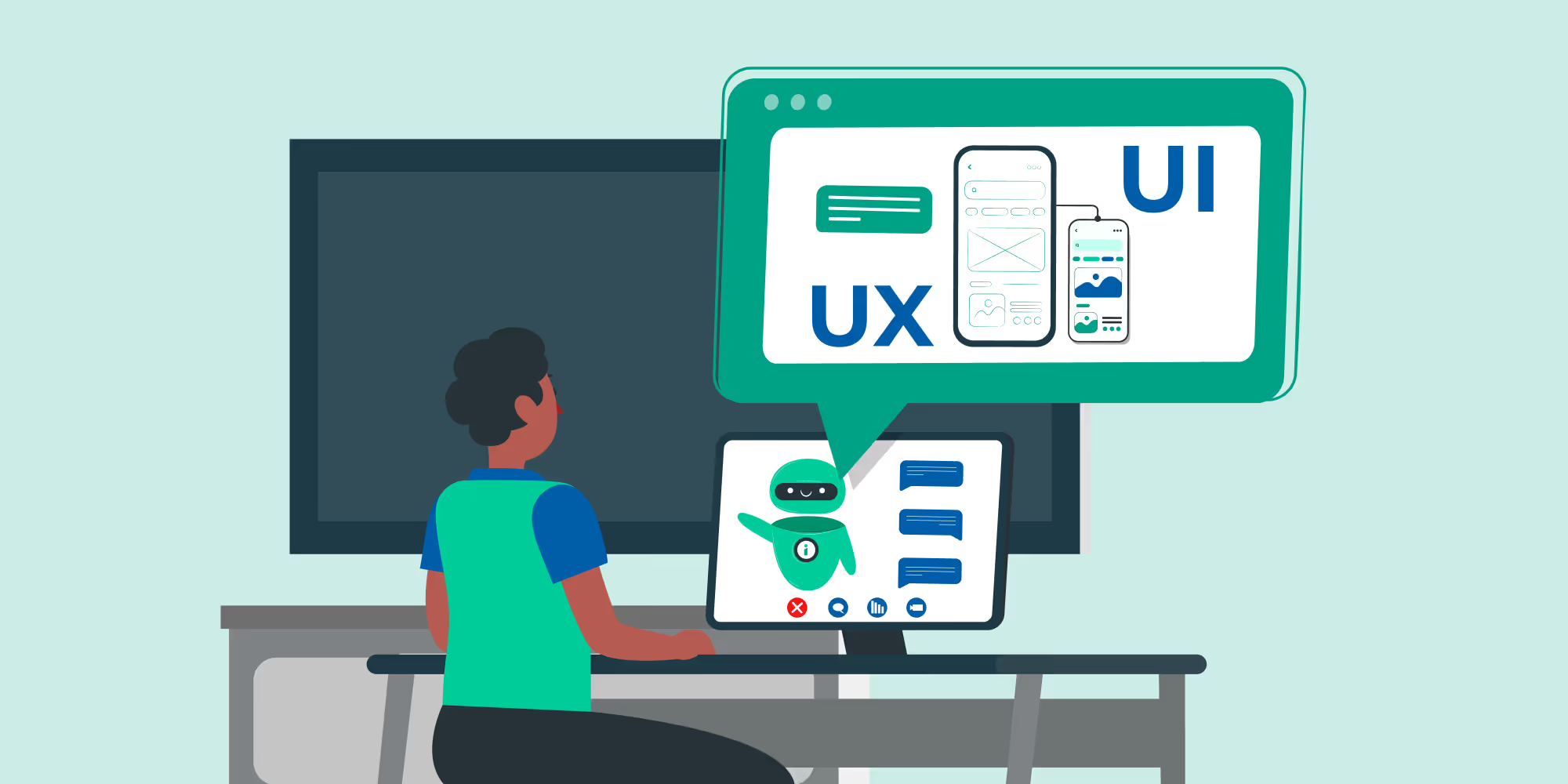
As a UX researcher, you live for the "aha!" moment. That flash of insight when you finally understand why a user hesitated, sighed, or abandoned a task. You know the most valuable feedback isn't just about what users click—it's about how they feel.
But capturing that feeling is tough.
Traditional UX interviews are powerful, but they’re manual and slow. You can only talk to a handful of users. You spend hours transcribing, coding, and trying to connect the dots.
By the time you have a report, the sprint is already over.
And the subtlest clues—a moment's pause, a slight change in tone—are often lost in your notes or simply impossible to quantify across interviews.
What if you could bottle that "aha!" moment and get it at scale?
Scale, Nuance, and Context: Why Agentic AI-Powered Interviews Are Simply Better
Imagine deploying an AI agent trained for UX interviews to conduct one-on-one sessions with hundreds of users simultaneously.
With AI agents for UX, you get:
- Instant, Perfect Transcripts: Every conversation is transcribed and searchable the moment it ends.
- Structured Data: The AI agent can extract key themes, mentions, and sentiment, turning unstructured conversations into structured, analyzable data.
- The Nuance Layer: This is the real superpower. Our AI agents are built for emotional tone analysis. They capture the unspoken feedback hidden in human conversation—the hesitation before an answer, the frustration in a user's voice, or the excitement when they discover a feature they love.
The Emotional Edge: What Traditional Tools Can’t Hear
Most UX researchers have a good ear. You know when a user’s saying something nice but actually means, “This sucks.” But multiply that by hundreds of conversations, and your brain will start tuning out the subtleties.
That’s where a UX AI agent shines. It doesn’t just log user actions or scan transcripts—it listens like a therapist with perfect memory.
Pauses? Noted. Rising pitch when discussing pricing? Logged. A sudden drop in energy when a certain feature is mentioned? Flagged.
This isn’t just emotional tone analysis—it’s empathy at machine scale. It’s what lets teams go beyond the surface of what users say and uncover how they actually feel about their experience.
Building the Feedback Flywheel with AI
Imagine this: Every product feedback interview your AI agent conducts feeds a loop of continuous improvement. Not quarterly. Not monthly. Weekly, even daily.
When you use AI agents for UX, you're not just testing usability—you’re capturing sentiment in near real time. The result? A living, breathing insights engine that grows smarter over time.
For fast-moving product teams, this means:
- Releasing features that actually land
- Catching emotional friction before it becomes churn
- And testing hypotheses before they even hit your roadmap
Think of it as the difference between having a suggestion box... and having 100 candid, insightful coffee chats with your users every week.
How to Integrate AI Agents into Your UX Workflow
Bringing UX research AI into your process is straightforward. Here are a few best practices:
- Start with Open-Ended Questions: Don't lead the user. Design questions that encourage storytelling, and let the AI agent handle the follow-ups.
- Focus on "Why," Not "What": Use AI agents for exploratory research. Let them uncover the emotional drivers and pain points that you can later validate with quantitative testing.
- Combine Insights: Layer the emotional and tonal insights from your AI interviews on top of your existing analytics and usability data for a complete picture of the user experience.
- Test, Learn, Iterate: Start with a small batch of interviews. Use the insights to refine your questions and hypotheses, then scale up to gather more data.
What to Look for in a UX AI Agent
Not all AI tools are created equal. Some are glorified transcription engines. Others are souped-up survey bots. Here's what truly matters when evaluating a UX research AI tool:
- Conversational UX fluency: Can it hold natural, unscripted conversations without sounding robotic?
- Real-time emotion detection: Does it capture tone, pace, hesitation, and tell you why it matters?
- UX-native analytics: Are the outputs usable for product, design, and leadership? Or are you just handed a data dump?
Spectra checks these boxes because it was purpose-built for carrying out human-like conversations. That means more natural interviews, richer insights, and fewer “how did we miss this?” moments.
The Next Chapter in UX Research
At the heart of UX is a simple truth: people don’t always say what they mean.
They pause. They hedge. They say “it’s fine” when something isn’t. And when you’re running lean, chasing deadlines, and juggling a million priorities, it’s easy to miss the stuff that really matters.
That’s where AI can help—not by replacing the researcher’s eye, but by amplifying it.
With AI-led interviews, you don’t just get more data. You get a deeper understanding. You hear the hesitation, the excitement, the subtle emotional friction that tells you what no heatmap ever could.
And that means better products—not because a machine told you what to build, but because it helped you hear your users a little more clearly.
In the end, it’s still about empathy. You’re just bringing a little extra firepower to the job.
As a UX researcher, you live for the "aha!" moment. That flash of insight when you finally understand why a user hesitated, sighed, or abandoned a task. You know the most valuable feedback isn't just about what users click—it's about how they feel.
But capturing that feeling is tough.
Traditional UX interviews are powerful, but they’re manual and slow. You can only talk to a handful of users. You spend hours transcribing, coding, and trying to connect the dots.
By the time you have a report, the sprint is already over.
And the subtlest clues—a moment's pause, a slight change in tone—are often lost in your notes or simply impossible to quantify across interviews.
What if you could bottle that "aha!" moment and get it at scale?
Scale, Nuance, and Context: Why Agentic AI-Powered Interviews Are Simply Better
Imagine deploying an AI agent trained for UX interviews to conduct one-on-one sessions with hundreds of users simultaneously.
With AI agents for UX, you get:
- Instant, Perfect Transcripts: Every conversation is transcribed and searchable the moment it ends.
- Structured Data: The AI agent can extract key themes, mentions, and sentiment, turning unstructured conversations into structured, analyzable data.
- The Nuance Layer: This is the real superpower. Our AI agents are built for emotional tone analysis. They capture the unspoken feedback hidden in human conversation—the hesitation before an answer, the frustration in a user's voice, or the excitement when they discover a feature they love.
The Emotional Edge: What Traditional Tools Can’t Hear
Most UX researchers have a good ear. You know when a user’s saying something nice but actually means, “This sucks.” But multiply that by hundreds of conversations, and your brain will start tuning out the subtleties.
That’s where a UX AI agent shines. It doesn’t just log user actions or scan transcripts—it listens like a therapist with perfect memory.
Pauses? Noted. Rising pitch when discussing pricing? Logged. A sudden drop in energy when a certain feature is mentioned? Flagged.
This isn’t just emotional tone analysis—it’s empathy at machine scale. It’s what lets teams go beyond the surface of what users say and uncover how they actually feel about their experience.
Building the Feedback Flywheel with AI
Imagine this: Every product feedback interview your AI agent conducts feeds a loop of continuous improvement. Not quarterly. Not monthly. Weekly, even daily.
When you use AI agents for UX, you're not just testing usability—you’re capturing sentiment in near real time. The result? A living, breathing insights engine that grows smarter over time.
For fast-moving product teams, this means:
- Releasing features that actually land
- Catching emotional friction before it becomes churn
- And testing hypotheses before they even hit your roadmap
Think of it as the difference between having a suggestion box... and having 100 candid, insightful coffee chats with your users every week.
How to Integrate AI Agents into Your UX Workflow
Bringing UX research AI into your process is straightforward. Here are a few best practices:
- Start with Open-Ended Questions: Don't lead the user. Design questions that encourage storytelling, and let the AI agent handle the follow-ups.
- Focus on "Why," Not "What": Use AI agents for exploratory research. Let them uncover the emotional drivers and pain points that you can later validate with quantitative testing.
- Combine Insights: Layer the emotional and tonal insights from your AI interviews on top of your existing analytics and usability data for a complete picture of the user experience.
- Test, Learn, Iterate: Start with a small batch of interviews. Use the insights to refine your questions and hypotheses, then scale up to gather more data.
What to Look for in a UX AI Agent
Not all AI tools are created equal. Some are glorified transcription engines. Others are souped-up survey bots. Here's what truly matters when evaluating a UX research AI tool:
- Conversational UX fluency: Can it hold natural, unscripted conversations without sounding robotic?
- Real-time emotion detection: Does it capture tone, pace, hesitation, and tell you why it matters?
- UX-native analytics: Are the outputs usable for product, design, and leadership? Or are you just handed a data dump?
Spectra checks these boxes because it was purpose-built for carrying out human-like conversations. That means more natural interviews, richer insights, and fewer “how did we miss this?” moments.
The Next Chapter in UX Research
At the heart of UX is a simple truth: people don’t always say what they mean.
They pause. They hedge. They say “it’s fine” when something isn’t. And when you’re running lean, chasing deadlines, and juggling a million priorities, it’s easy to miss the stuff that really matters.
That’s where AI can help—not by replacing the researcher’s eye, but by amplifying it.
With AI-led interviews, you don’t just get more data. You get a deeper understanding. You hear the hesitation, the excitement, the subtle emotional friction that tells you what no heatmap ever could.
And that means better products—not because a machine told you what to build, but because it helped you hear your users a little more clearly.
In the end, it’s still about empathy. You’re just bringing a little extra firepower to the job.

AI agents aren’t just powering products or automating workflows - they’re showing up in hiring rooms.
Companies across industries are now using AI agent-led video interviews to scale hiring, simplify evaluations, and reduce bias.
And for jobseekers, that means learning to succeed in a new kind of interview - one where you’re interacting with an AI-powered agent instead of a traditional recruiter.
This shift doesn’t make interviews harder. It just makes preparation a bit more important.
In this blog, we break down -
- What exactly an AI agent-led interview looks like
- Why this format is gaining traction
- How jobseekers like you can adapt and thrive
- And how tools like SpectraSeek can help you prep, perform, and stand out
So, what is an AI agent-led interview?
An AI agent-led interview is a structured video interview where an AI agent with conversational intelligence conducts the session.
Unlike traditional or one-way interviews,
- You’re interacting with a dynamic AI that asks role-specific questions
- You may be assessed across communication clarity, delivery, relevance, and confidence
- There’s no live human present, but the experience is far from static - AI agents can follow up, reframe, or shift tone
These interviews are often used in early screening rounds to evaluate multiple candidates quickly and consistently.
Why are companies using AI agents for interviews?
This shift is driven by both efficiency and equity.
AI agents bring several key advantages to the hiring process:
1. Standardized evaluation
Every candidate gets asked questions based around the same template, reducing unconscious bias and subjectivity in initial screenings.
2. Easily scalable
For high-volume hiring, AI-driven interviews allow recruiters to assess hundreds of candidates in parallel - without burning out.
3. Skill-first focus
AI agents can focus on what is said (and how), rather than being influenced by resumes or first impressions.
4. Data-driven insights
Interview recordings can be analyzed for key traits like communication skills, domain knowledge, and cultural fit - often with a scoring rubric to assist human recruiters.
What makes AI agent-led interviews different for candidates?
Let’s be clear - this is not a downgrade from human interviews. It’s just different. And different means you need a new kind of readiness.
Here’s how AI agent-driven interviews stand out,
1. No social cues to guide you
In a human interview, you can read the room. You get nods, smiles, shifts in tone. With an AI agent, those cues are limited or absent - which means your delivery needs to be clear, confident, and intentional from the start.
2. You’re speaking to logic, not empathy
Human interviewers might reward charm or storytelling. AI agents are more focused on structure, substance, and clarity.
You’re not there to impress - you’re there to communicate your value, clearly and effectively.
3. You're evaluated holistically
AI agents assess multiple dimensions:
- Clarity of speech
- Conciseness of response
- Keyword alignment with job requirements
- Nonverbal cues like eye contact and posture (yes, the camera sees it too)
Preparation isn’t just about what you say, it’s about how you show up.
4. You need to be tech-comfortable
From camera setup to mic clarity and speaking to a screen, this format can feel new at first. The more you practice it, the more second-nature it becomes.
How SpectraSeek helps you practice for AI-led interviews, and nail them
You can’t prepare for a new kind of interview with old methods.
SpectraSeek is an AI agent-powered mock interview tool built specifically to help you prepare for agentic AI-led video interviews. It mirrors the actual interview format - and gives you real feedback, fast.
Here’s how it adds value at every stage of your prep:
1. Practice with a real AI agent
SpectraSeek simulates AI agent-led interviews - so you’re not just reading questions off a list. You’re responding to an intelligent, interactive agent that replicates the real experience.
You’ll,
- Speak your answers out loud
- Engage with follow-ups and different question types
- Practice maintaining presence on camera
- Build familiarity with how structured AI interviews flow
No awkward coaching calls. No judgment. Just realistic, high-relevance practice.
2. Upload your resume and role to get tailored prep
Generic mock questions can only get you so far.
With SpectraSeek, you can,
- Upload your resume
- Paste in a real job description
- Get interview questions customized to the role you’re targeting
That means you’re not just rehearsing blindly or vaguely; you’re rehearsing with purpose.
3. Receive instant, actionable feedback
After each session, SpectraSeek gives you detailed performance insights:
- Did your speech have clarity?
- Was your answer structured and relevant to the question?
- And more...
This kind of feedback is nearly impossible to get from traditional mock interviews, and it’s what makes SpectraSeek truly powerful.
4. Track your improvement over time
SpectraSeek saves your sessions and monitors your progress.
You’ll be able to,
- See how your confidence improves
- Identify recurring habits (like saying “uhm” too much)
- Know when you’re ready to take on the real interview
You’re not preparing blindly; you’re building skills with a measurable outcome.
This matters because AI agent driven interviews are the future, and early adopters win
AI agents aren’t a passing phase. They’re becoming the new standard for screening, and they’re only going to get more advanced and widely used.
Candidates who understand how to communicate effectively with AI agents have an edge - not just in getting hired, but in understanding how the hiring world is evolving.
With SpectraSeek, you’re gaining an advantage in a new hiring format.
AI agents aren’t just powering products or automating workflows - they’re showing up in hiring rooms.
Companies across industries are now using AI agent-led video interviews to scale hiring, simplify evaluations, and reduce bias.
And for jobseekers, that means learning to succeed in a new kind of interview - one where you’re interacting with an AI-powered agent instead of a traditional recruiter.
This shift doesn’t make interviews harder. It just makes preparation a bit more important.
In this blog, we break down -
- What exactly an AI agent-led interview looks like
- Why this format is gaining traction
- How jobseekers like you can adapt and thrive
- And how tools like SpectraSeek can help you prep, perform, and stand out
So, what is an AI agent-led interview?
An AI agent-led interview is a structured video interview where an AI agent with conversational intelligence conducts the session.
Unlike traditional or one-way interviews,
- You’re interacting with a dynamic AI that asks role-specific questions
- You may be assessed across communication clarity, delivery, relevance, and confidence
- There’s no live human present, but the experience is far from static - AI agents can follow up, reframe, or shift tone
These interviews are often used in early screening rounds to evaluate multiple candidates quickly and consistently.
Why are companies using AI agents for interviews?
This shift is driven by both efficiency and equity.
AI agents bring several key advantages to the hiring process:
1. Standardized evaluation
Every candidate gets asked questions based around the same template, reducing unconscious bias and subjectivity in initial screenings.
2. Easily scalable
For high-volume hiring, AI-driven interviews allow recruiters to assess hundreds of candidates in parallel - without burning out.
3. Skill-first focus
AI agents can focus on what is said (and how), rather than being influenced by resumes or first impressions.
4. Data-driven insights
Interview recordings can be analyzed for key traits like communication skills, domain knowledge, and cultural fit - often with a scoring rubric to assist human recruiters.
What makes AI agent-led interviews different for candidates?
Let’s be clear - this is not a downgrade from human interviews. It’s just different. And different means you need a new kind of readiness.
Here’s how AI agent-driven interviews stand out,
1. No social cues to guide you
In a human interview, you can read the room. You get nods, smiles, shifts in tone. With an AI agent, those cues are limited or absent - which means your delivery needs to be clear, confident, and intentional from the start.
2. You’re speaking to logic, not empathy
Human interviewers might reward charm or storytelling. AI agents are more focused on structure, substance, and clarity.
You’re not there to impress - you’re there to communicate your value, clearly and effectively.
3. You're evaluated holistically
AI agents assess multiple dimensions:
- Clarity of speech
- Conciseness of response
- Keyword alignment with job requirements
- Nonverbal cues like eye contact and posture (yes, the camera sees it too)
Preparation isn’t just about what you say, it’s about how you show up.
4. You need to be tech-comfortable
From camera setup to mic clarity and speaking to a screen, this format can feel new at first. The more you practice it, the more second-nature it becomes.
How SpectraSeek helps you practice for AI-led interviews, and nail them
You can’t prepare for a new kind of interview with old methods.
SpectraSeek is an AI agent-powered mock interview tool built specifically to help you prepare for agentic AI-led video interviews. It mirrors the actual interview format - and gives you real feedback, fast.
Here’s how it adds value at every stage of your prep:
1. Practice with a real AI agent
SpectraSeek simulates AI agent-led interviews - so you’re not just reading questions off a list. You’re responding to an intelligent, interactive agent that replicates the real experience.
You’ll,
- Speak your answers out loud
- Engage with follow-ups and different question types
- Practice maintaining presence on camera
- Build familiarity with how structured AI interviews flow
No awkward coaching calls. No judgment. Just realistic, high-relevance practice.
2. Upload your resume and role to get tailored prep
Generic mock questions can only get you so far.
With SpectraSeek, you can,
- Upload your resume
- Paste in a real job description
- Get interview questions customized to the role you’re targeting
That means you’re not just rehearsing blindly or vaguely; you’re rehearsing with purpose.
3. Receive instant, actionable feedback
After each session, SpectraSeek gives you detailed performance insights:
- Did your speech have clarity?
- Was your answer structured and relevant to the question?
- And more...
This kind of feedback is nearly impossible to get from traditional mock interviews, and it’s what makes SpectraSeek truly powerful.
4. Track your improvement over time
SpectraSeek saves your sessions and monitors your progress.
You’ll be able to,
- See how your confidence improves
- Identify recurring habits (like saying “uhm” too much)
- Know when you’re ready to take on the real interview
You’re not preparing blindly; you’re building skills with a measurable outcome.
This matters because AI agent driven interviews are the future, and early adopters win
AI agents aren’t a passing phase. They’re becoming the new standard for screening, and they’re only going to get more advanced and widely used.
Candidates who understand how to communicate effectively with AI agents have an edge - not just in getting hired, but in understanding how the hiring world is evolving.
With SpectraSeek, you’re gaining an advantage in a new hiring format.