%201.svg)

Internal Coaching via AI Interview Agents: Feedback Without the Fear


Feedback is essential in the workplace… but also complicated. While constructive criticism is crucial for growth, many employees fear it.
Managers, too, often struggle with delivering it effectively. But what if you could get honest, unbiased, and actionable feedback without judgment, awkwardness, or fear?
That’s exactly what internal coaching via AI interview agents makes possible.
Why traditional coaching will benefit from an upgrade
Coaching, when done right, transforms performance. But in reality, most organizations face two key challenges:
- Inconsistency in delivery - Not all managers are great coaches. Some over-criticize; others avoid giving feedback altogether.
- Feedback anxiety - Employees often hesitate to open up in real-time sessions due to fear of judgment, bias, or repercussions.
Traditional coaching methods, while valuable, often lack the data, consistency, and neutrality needed to create psychological safety. That’s where agent-based video interviews come into play.
Why AI interview agents are a new and improved way to coach internally
Imagine a tool that not only listens and evaluates but also learns from every interaction. Welcome to the world of interview agents powered by AI.
These are not your standard bots. They’re advanced conversational AI for interviews, trained on domain-specific data to ask the right questions, capture nuanced responses, and offer real-time qualitative feedback - without making the employee feel "watched."
Here’s what makes this shift so powerful:
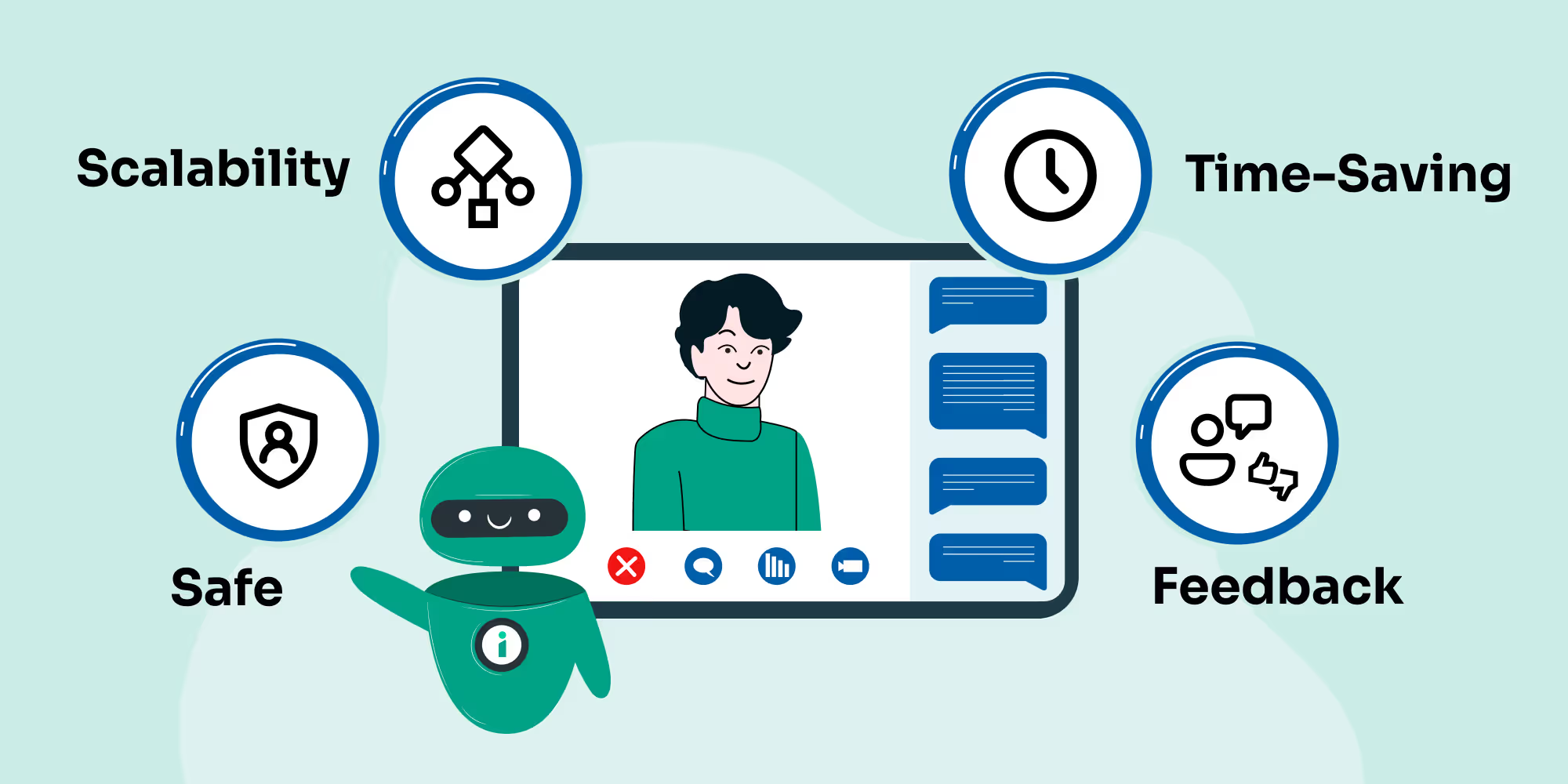
Safe environment - Employees are more candid with AI. A study by Oracle and Workplace Intelligence found that 82% of people believe robots can support their mental health better than humans.
Scalability - An AI interview agent can run hundreds of coaching sessions simultaneously, something no team of human coaches can manage.
Consistency - No human bias, no bad day moods. Just clear, data-backed feedback.
This is where agentic AI-powered interviews are making things easier, not just in hiring but in employee skill development too.
How internal coaching works using agentic AI
Here’s a simple workflow,
Customized AI agent creation - Enterprises build custom AI agents for qualitative insights based on role, level, and goals.
Automated video interview sessions - Employees engage in automated video interview tools designed for coaching, not evaluation.
Conversational intelligence in action - The agent uses conversational intelligence to interpret tone, context, and sentiment, producing a feedback report.
Actionable insights - Employees get instant feedback on communication skills, confidence, clarity, and knowledge gaps, no human filter.
This is agentic AI for human conversations powered by conversational intelligence at its best.
What are the real benefits of adopting AI agents for internal interviews?
No fear feedback - Employees respond more openly to machines than managers when it comes to sensitive performance topics.
Time-saving for leaders - Coaching isn’t scalable when it depends on people. AI agents scale it effortlessly.
Data-backed coaching - Employees can track their progress across sessions with tangible data, something a manager might miss.
In fact, there are use cases for AI interview agents across the enterprise
Leadership grooming - Coach mid-level managers on situational responses.
Sales enablement - Run pitch practice sessions with real-time conversational feedback.
Customer support - Train teams to handle difficult conversations with empathy and clarity.
It’s time to coach differently. And it starts with the right questions - asked by the right agents.
Ready to see this in action for your team? Let’s talk.
You might also like
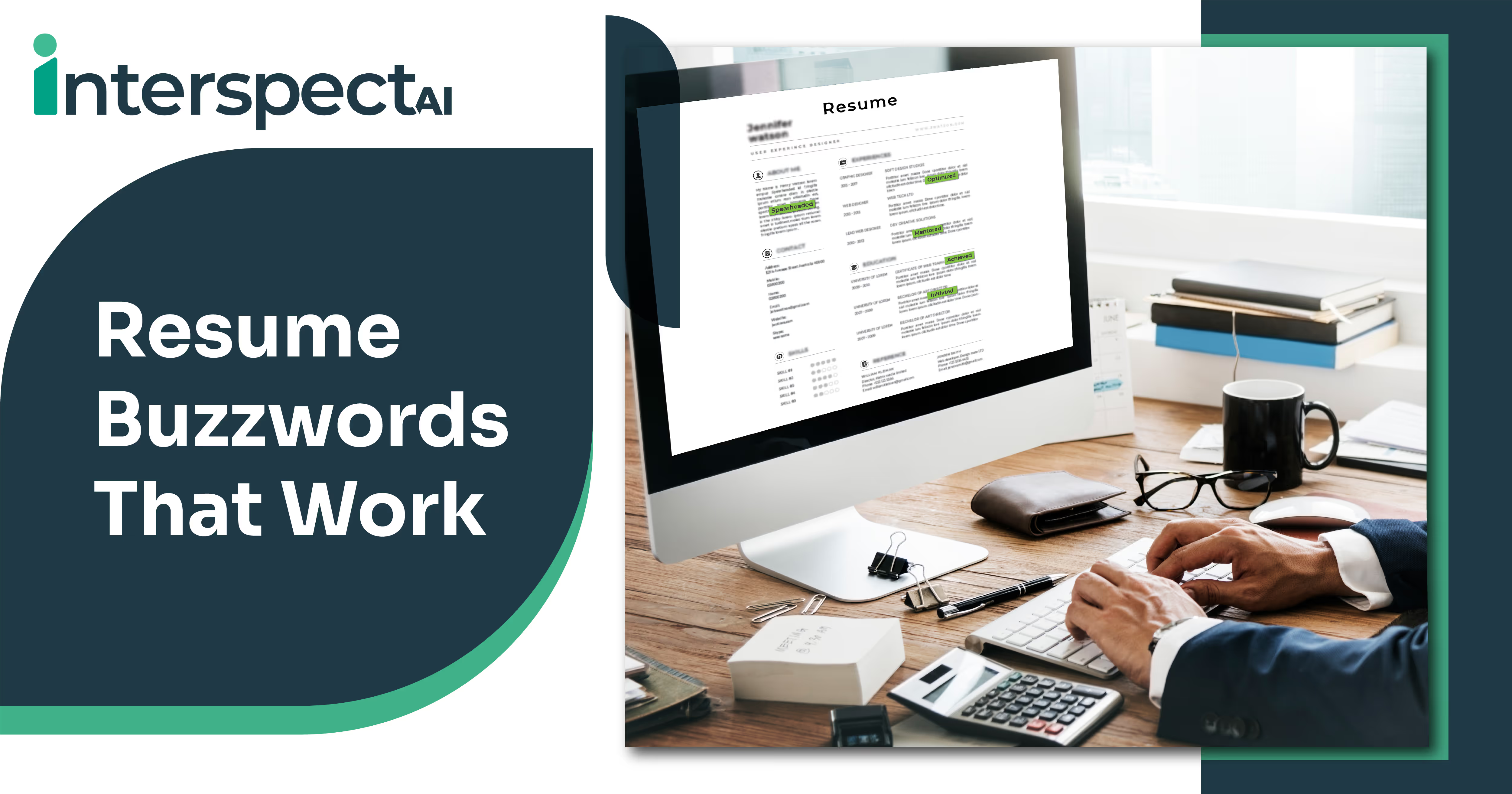

Buzzwords -action verbs like "implemented" or adjectives like "innovative" can elevate your resume from bland to alive. They catch the eye, demonstrate action, and add clarity.
Yet, not all buzzwords carry real weight. Overused clichés like "team player" or "results-driven" have become resume wallpaper - seen so often they’ve lost meaning. Recruiters often skip them, sensing filler, not substance.
Buzzwords that often cringe recruiters out
Here are some resume cliches to avoid, and why they backfire,
- “Team player,” “detail-oriented,” “results-driven,” “hardworking,” “problem solver,” “creative,” “go-getter” - These are vague and overused, which makes them forgettable at best and cringe-inducing at worst.
- “Responsible for,” “proven track record,” “strong work ethic” - Empty fluff. Saying you’re responsible or ethical is less impactful than showing what you achieved.
- “Hard worker,” “self-motivated,” “born leader,” “excellent communication skills,” “detail-oriented” - All common in job-seeker soundbites, but rarely backed with concrete evidence.
One recruiter on Reddit put it bluntly:
"Do you think using terms like 'detail-oriented', 'driven', or 'highly motivated' are gonna cut it? Absolutely not."
Instead, they want real data - years of experience, industries, measurable impact.
Use buzzwords wisely by being impactful and not generic
Here’s what works and how to use it right.
1. Opt for Strong Action Verbs
Choose verbs like "achieved," "managed," "implemented," "spearheaded," "optimized," "resolved" - they frame you as someone who does, not just is.
2. Quantify Your Impact
Replace vague claims with measurable outcomes:
- Instead of "improved sales," say “increased sales by 25% in Q1”.
- Swap “led a team” with “managed a team of 8 to deliver a project two weeks ahead of schedule”.
3. Tailor to Job Context
Mirror keywords from the job posting - ATS (Applicant Tracking Systems) value accuracy - but only if you can substantiate them with real examples.
4. Be Specific, Not Generic
Instead of saying you’re a "creative thinker," talk about the campaign you designed that drove 50% traffic growth.
Buzzwords that actually work when used thoughtfully
Here’s a curated list of effective buzzwords - powerful, specific, and action-focused:
- Active achievement verbs: Achieved, Initiated, Managed, Implemented, Led, Designed, Resolved, Improved, Analyzed, Developed, Spearheaded, Innovated, Negotiated, Orchestrated, Optimized, Collaborated, Mentored, Exceeded.
- Alternatives to tired adjectives: Use domain-specific, measurable language instead of fluff like “creative.” Provide outcomes.
- Industry-specific terms (when real):
- Marketing: SEO, Omnichannel marketing, SERP, AI, Customer journey.
- Project Management: Risk management, Cost management, Gantt chart, Process improvement.
- Teaching: Blended learning, Accessibility, Mastery-based grading.
Quick Table: Buzzwords to Avoid vs. Better Alternatives
Make every word earn its place!
Keep it real. Use terms you can back up - false claims risk credibility.
Mix sentence length for flow. Start with a short punch, then expand with context.
Use transition words like “however,” “meanwhile,” “in short,” to guide the reader.
Focus on achievements, not adjectives. Every bullet should show what and how you did something.
Buzzwords aren't inherently bad - misused ones are. Avoid the clichés that blur into the background. Instead, choose words that show, not tell. Quantify impact. Tailor each resume. That’s how your resume becomes memorable, not just legal-sized.
Your resume gets you noticed, but your interview seals the deal. Practice smarter with SpectraSeek, the AI tool that helps you refine answers and leave clichés behind!
Let's face it: the first-round job interview has always been a source of stress and frustration. The myth is that candidates want a high-touch human process, but in reality, they're tired of slow, inconsistent, and often biased human screenings. The data is clear: when given a choice, modern applicants are opting for the structured efficiency of AI Screening Interviews. They aren't rejecting human recruiters; they are demanding a better, faster, and fairer Candidate Experience.
Three Key Themes Driving Candidate Preference for AI
1. Autonomy and Access (It's About Their Schedule)
For a candidate juggling their current job, fitting a first-round screening into a narrow 9-to-5 window feels impossible. The primary appeal of AI lies in handing control of the process back to the person applying.
The Candidate Advantage:
- 24/7 Availability: Automated candidate interviews solve the scheduling crisis completely. The applicant gets to choose the exact time, day, and location for the screening, offering ultimate convenience and eliminating stressful email tag.
- Speed and Respect: The agonizing wait after an interview is gone. Since the AI scores the interview automatically, companies can now commit to delivering status updates and feedback within hours, not weeks. This demonstrates real respect for the candidate's time.
2. Objectivity and Trust (It's About Being Fairly Heard)
Candidates know that human screeners often fall prey to unconscious biases, maybe they didn't like the color of your shirt, or they didn't appreciate your speaking style. Job seekers are tired of feeling judged on anything other than their qualifications.
The Candidate Advantage:
- Standardized Fairness: AI ensures radical consistency. Every applicant answers the same questions and is scored using the same objective logic. This consistency provides procedural fairness, dramatically improving the candidate’s trust in the process and their perception of the Bias Reduction Index.
- Focus on Competency: The structured assessment from AI Screening Interviews eliminates ambiguity. Candidates know exactly what is expected of them, allowing them to focus on demonstrating their measurable skills rather than navigating inconsistent questions.
3. Value and Preparation (It's About Gaining Insight)
Getting a generic "we moved forward with other candidates" email is the worst. Modern job seekers view the application process as a two-way street and expect to gain something of value, even if they aren't hired.
The Candidate Advantage:
- Actionable Feedback: This is where advanced AI Candidate Evaluation Tools shine. By analyzing responses, relevance, and pacing, these platforms provide personalized feedback on strengths and gaps. This transforms the screening from a stressful passive audition into a valuable coaching session, improving the candidate's Interview Readiness.
- Data-Driven Transparency: Candidates value clear, quantified insights into their performance, which they can use to prepare better for later human rounds or future opportunities.
SpectraHire: A Candidate-First Experience
Candidates increasingly prefer systems like SpectraHire because the platform is designed to provide value and transparency to the recruiter, which can ultimately provide benefits to the applicant as well. The system’s automated feedback mechanisms turn a nerve-wracking interview into a data-driven process. Recruiters gain a better Quality-of-Hire (QoH) because candidates are better prepared and more engaged, while candidates benefit from objective metrics delivered by the system, should the recruiter choose to share the insights with them. These metrics include:
- Overall Candidate Fit: Provides the applicant with a clear understanding of their strengths, gaps, and next suggested steps for improvement.
- Authenticity Score: The system ensures the candidate knows that genuine, personal examples are recognized and valued over rehearsed scripts.
- Communication Skills/Confidence: Offers measurable insights into their clarity of explanations and pacing, which are key takeaways for any future interview.
- Technical Proficiency: Gives them a standardized score on hard skills, confirming their ability to pass the role's technical requirements.
By empowering candidates with these objective data points, SpectraHire fundamentally improves the hiring funnel for both parties, making the recruiting team the destination for top, prepared talent.
How SpectraSeek Helps Candidates Prepare for Interviews?
The transparency and feedback that candidates value can also be accessed during their preparation phase. SpectraSeek provides a comprehensive mock interview platform that helps candidates develop strong interviewing skills before they face a real recruiter. Candidates simply upload their resume and target job description, then engage with questions tailored to their field and experience level. The platform helps candidates develop strong interviewing skills that translate across all interview formats be it AI-based screenings, phone interviews, or in-person conversations with hiring managers.
SpectraSeek's value lies in its immediate, actionable feedback mechanism. Following each practice interview session, candidates receive detailed scoring on response alignment with role requirements, communication gaps, and overall answer quality. This level of targeted coaching is now accessible on-demand, enabling candidates to practice according to their own schedules via platforms like SpectraSeek.
Conclusion
The future of hiring is collaborative, with AI Screening Interviews playing a dominant role in the early stages. Candidates overwhelmingly choose these platforms for the procedural fairness, speed, and objective data they offer—benefits that traditional human screening simply cannot match at scale. SpectraHire proves that a highly automated process can still be a highly human and valuable experience. Embracing SpectraHire is the smartest way for companies to attract and retain talent by delivering the transparent, efficient experience modern job seekers demand while securing the highest quality hire.
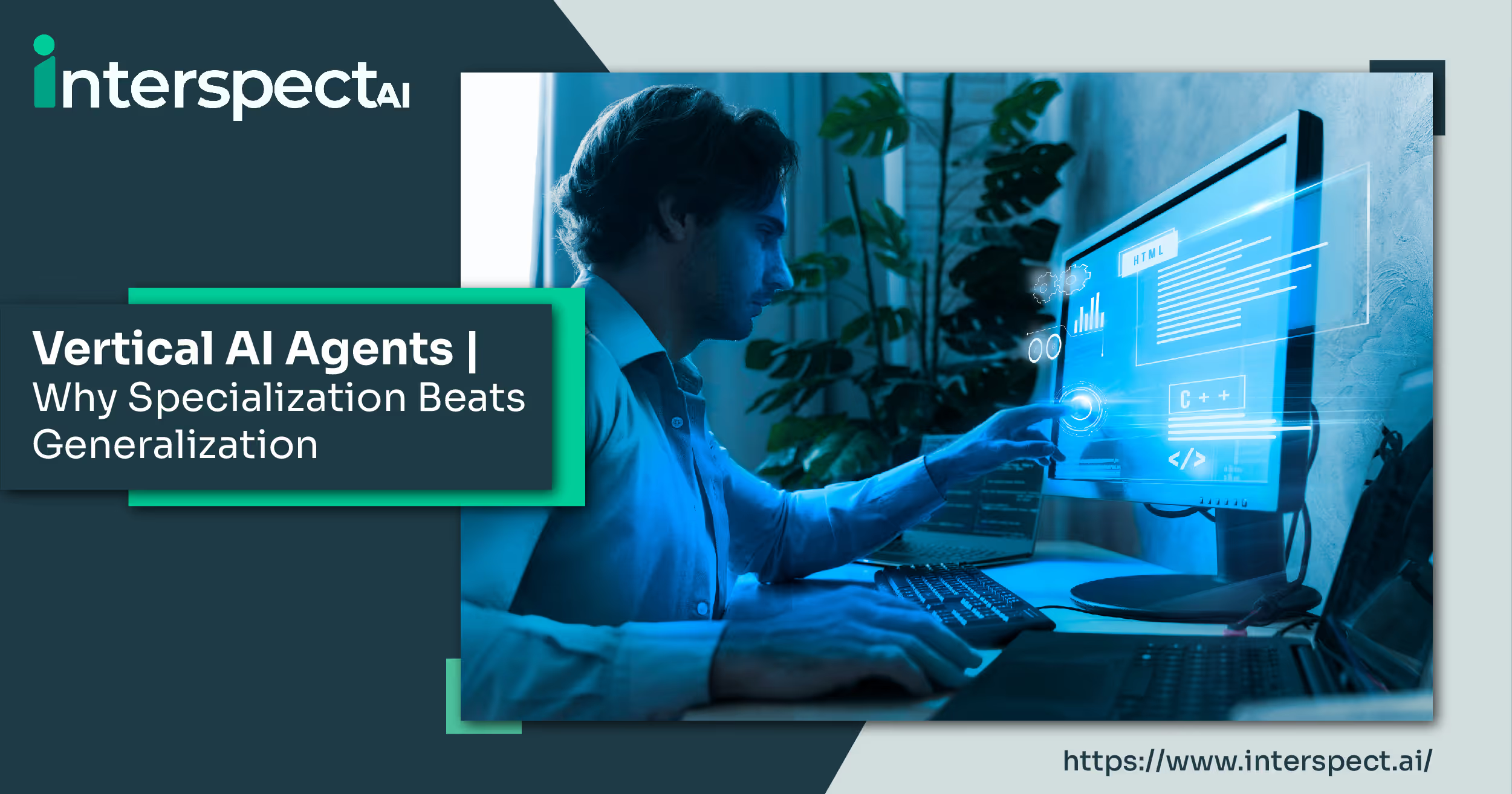
As AI technology advances, it becomes increasingly evident that general-purpose models often struggle to address the complexities inherent in specialized domains. Vertical AI agents, explicitly designed for industries like healthcare, finance, retail, and manufacturing, leverage domain-specific datasets, customized reasoning processes, and specialized tools to outperform generalist AI systems.
Trained on curated, industry-specific data and embedded with workflows tailored to unique business requirements, vertical AI agents accelerate deployment, reduce risk, and provide measurable operational improvements.
1. Why Specialization Outperforms Generalization
General AI models face inherent challenges in specialized settings due to:
- Domain-Specific Context Gaps: Broad training data often misses critical industry terminology and nuanced decision factors.
- Regulatory Risks: Lack of embedded knowledge about sector-specific compliance can lead to failures or unsafe outcomes.
- Uneven Performance: General models fall short on highly specific or regulated tasks.
Vertical AI agents overcome these by embedding deep expertise and domain knowledge, enabling higher accuracy, compliance, and reliability in complex workflows (see agentic systems design patterns in this research).
2. Core Components of Vertical AI Agents
Drawing from established architectural frameworks, vertical AI agents commonly integrate:
- Layered Memory Systems: Working memory for immediate context, episodic memory for past interactions, and knowledge base memory grounded in domain facts and regulatory rules (source).
- Advanced Reasoning Techniques: Chain-of-thought prompting, tree-of-thought strategies, and planning algorithms enable strategic problem-solving within specialized contexts (source).
- Cognitive Skills Modules: Modular, domain-tailored inference engines encapsulating workflows and compliance procedures, allowing precise and compliant decision-making (source).
- Flexible Tool Orchestration: Dynamic selection and integration of APIs, databases, and automation tools optimized for industry-specific data processes (source).
3. Architecture Patterns That Enable Specialization
Effective vertical AI architectures often exhibit:
These design patterns ensure agents remain adaptable, auditable, and trusted throughout deployment (learn more).
4. Real-World Impact Across Industries
Vertical AI agents’ domain expertise facilitates superior outcomes in these high-stakes environments compared to broad AI models.
5. Best Practices for Deploying Vertical AI Agents
- Involve Domain Experts: Define domain-specific ontologies, compliance rules, and success metrics collaboratively to ensure alignment and consistency.
- Embed Compliance Frameworks: Build regulatory knowledge into models and workflows with human oversight checkpoints.
- Implement Retrieval-Augmented Generation (RAG): Combine symbolic and neural methods for precise, explainable outputs.
- Modularize Architectures: Utilize microservices for cognitive skill components to enable scalable and maintainable solutions.
- Continuous Monitoring: Leverage telemetry and expert feedback loops to detect drift and optimize performance.
InterspectAI: Leading Vertical AI Innovation
At InterspectAI, we specialize in designing and deploying vertical AI solutions that deeply embed domain expertise through modular Cognitive Skills Modules and advanced memory and reasoning frameworks. Our flagship Spectra platform orchestrates these components through dynamic tool integrations, delivering tailored, compliant, and scalable AI agents for healthcare, finance, manufacturing, and other industries.
Collaborating closely with industry experts, we build retrieval-augmented multi-agent systems that automate complex workflows while maintaining accuracy and traceability. Our hands-on experience translates into measurable improvements—reducing error rates, accelerating regulatory compliance, and enhancing operational efficiency.
By applying best practices informed by the latest research, such as the agentic cognitive architectures described in Agentic Systems, InterspectAI empowers enterprises to harness the full power of vertical AI and transform their industry-specific challenges into competitive advantages.
Conclusion
Vertical AI agents clearly demonstrate that specialization outperforms generalization in addressing complex, regulated industry problems. By embedding domain-specific knowledge, reasoning frameworks, and compliance controls into modular, scalable architectures, these agents maximize accuracy, reliability, and efficiency—unlocking significant enterprise value.
Subscribe to The InterspectAI Blog