%201.svg)

How AI Mock Interviews Help You Practice for Different Industries


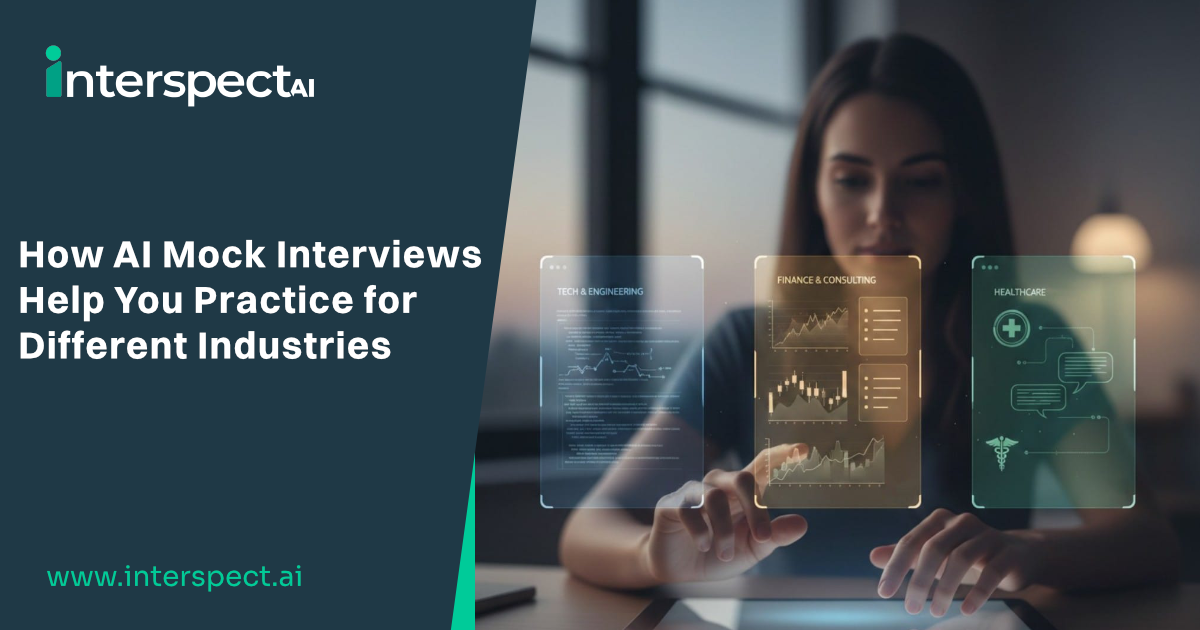
The most common advice given to job seekers is often the least helpful. Students are told just to be confident and tell a good story. While this works for a general introduction, it falls apart when the questions get specific. A nursing interview requires a completely different mode of thinking than an investment banking interview. One demands empathy and protocol adherence while the other demands analytical precision and market awareness.
The problem with traditional practice methods is that they are often generic. A friend or a generalist career counselor cannot easily switch between playing the role of a senior software architect and a clinical director. This is where AI mock interviews are changing the game. By utilizing domain-specific knowledge, modern AI agents can simulate the distinct language, pressure, and expectations of different industries. This allows candidates to move beyond basic behavioral questions and practice the specific skills that actually get them hired.
The Problem with the Generalist Approach
Most candidates prepare for the "standard" interview. They rehearse their answers to "What is your greatest weakness?" and "Tell me about a time you failed." While these questions are common, they are rarely the deciding factor in specialized roles.
In technical fields, the interviewer is looking for technical proficiency. They want to know if you can explain complex concepts simply. In client-facing roles, they are looking for communication- confidence and persuasion. When a candidate practices with a generalist tool or person, they miss these nuances. They might give a perfectly structured answer that completely fails to demonstrate the specific experience areas relevant to the job. AI tools bridge this gap by checking if you answered it like a professional in that field, with personal examples and usage of key metrics in your answer.
Practicing for Tech and Engineering
For software engineers, data scientists, and developers, the interview is less about personality and more about problem-solving logic. It is not enough to just write the correct code; you must be able to articulate your thought process while you write it.
AI agents trained on technical knowledge graphs can act as technical interviewers. They ask follow-up questions that probe the "why" behind a solution. If a candidate suggests a specific database, the AI can ask about scalability trade-offs. This helps students build awareness. They learn to verbalize their engineering decisions clearly, ensuring their technical proficiency is understood by the interviewer. This type of verbal rehearsal is critical for passing the "system design" rounds of major tech companies.
Precision in Finance and Consulting
In high-stakes fields like investment banking or management consulting, communication style is paramount. Answers need to be structured, data-backed, and concise. Rambling is often seen as a lack of clarity.
AI practice tools help candidates refine this specific communication style. By analyzing response insights, the AI can flag answers that lack structure or fail to get to the point quickly. It forces candidates to practice the "bottom line up front" communication style preferred by executives. Candidates learn to align their stories with the high-pressure environment of the industry, improving their overall candidate fit by sounding like an insider rather than an outsider.
Empathy and Protocol in Healthcare
Healthcare interviews present a unique challenge. Candidates must balance clinical knowledge with compassion. A correct medical answer delivered without empathy can result in rejection.
Advanced AI simulations can present situational judgment questions common in nursing and medical school interviews. For example, an agent might ask how a candidate would handle a non-compliant patient. The AI then evaluates the response not just for procedural correctness but for the presence of patient-centered language. This feedback helps candidates improve their authenticity score by encouraging them to share genuine, human-centered examples of care rather than clinical textbook answers.
InterspectAI: The Vertical AI Advantage
While many platforms offer generic interview templates, InterspectAI differentiates itself through its SpectraSeek platform, which uses "Vertical AI Agents." These are not one-size-fits-all chatbots. They are specialized agents designed to understand the specific competency frameworks of different professions.
Here is how InterspectAI delivers industry-relevant preparation:
- Domain-Specific Reasoning: SpectraSeek interviews can be configured for a variety of roles by simply uploading your resume and job description. For example, a legal role interview can test you for legal terminology and argumentation. An interview configured for sales understands negotiation and objection handling. This ensures that the Role Alignment feedback is accurate and relevant to the specific job description.
- Validating Technical Depth: The platform assesses ‘Technical Proficiency’ by analyzing whether the candidate used the correct industry-standard terminology and logic in their explanation. It prevents candidates from getting away with vague, surface-level answers.
- Contextual Follow-Ups: Unlike static scripts, SpectraSeek's agents listen to the answer and ask relevant follow-up questions. If a marketing student mentions a campaign, the AI might ask about the ROI or the specific channels used. This mimics the depth of a real professional dialogue.
- Actionable Skill Gaps: After the session, the student receives a detailed ‘Skills Breakdown.’ This highlights exactly which industry-specific competencies were demonstrated and which were missing, providing a clear roadmap for improvement before the real interview.
Conclusion
The era of generic interview preparation is ending. To succeed in a specialized job market, candidates need specialized practice. They need to learn the language, the logic, and the expectations of their chosen field before they ever step into the interview room.
By leveraging AI mock interviews that can adapt to different industries, students and job seekers can build the precise confidence they need. They stop practicing to be a "good interviewee" and start practicing to be a "good engineer," a "good nurse," or a "good analyst."
Train for the job you want. Stop practicing with generic tools. Partner with InterspectAI today to bring industry-specific AI simulation to your career center and give your students the specialized edge they need.
FAQs
Can AI really judge the quality of a technical answer?
Yes. Advanced platforms like SpectraSeek utilize vertical AI models trained on specific industry data. This allows them to evaluate technical proficiency by checking if the candidate's explanation aligns with established engineering principles, coding standards, or financial concepts, ensuring the feedback is factually accurate.
How does practicing with AI help with industry jargon?
AI agents are programmed with the vocabulary of specific sectors. By interacting with an agent that speaks the language of the industry, candidates naturally pick up on and practice using the correct terminology. The feedback on communication skills often highlights if a candidate is using imprecise language where specific industry terms would be more effective.
Is this useful for non-technical roles like sales or HR?
Absolutely. For roles like sales, the AI evaluates persuasion, clarity, and objection handling. For HR, it might focus on conflict resolution and policy interpretation. The system measures role alignment regardless of the field by comparing the response content to the core competencies required for that specific job family.
How does AI check if I am a good cultural fit for an industry?
While AI doesn't judge culture in the human sense, it evaluates overall candidate fit by analyzing behavioral indicators. For example, in a fast-paced startup role, you might look for adaptability and ownership in your stories. A compliance role requires attention to detail and process adherence. This data helps you align your presentation with industry values.
You might also like


The idea of practicing with an AI agent before an important interview might seem impersonal—or even intimidating. Many job seekers assume that interview prep, like real interviews, is best done with another human across the table, someone who brings empathy, nuance, and conversation into the process.
But that assumption is changing fast. A growing number of candidates are not only comfortable using AI-powered mock interview tools—they actually prefer them. This trend isn’t about adopting new technology for the sake of novelty. It’s about something more meaningful: the need for a fairer, more transparent way to prepare for the hiring process.
Traditional mock interviews, when available, can feel inconsistent, unclear, or even anxiety-inducing. Feedback is often vague, leaving candidates uncertain whether their performance has actually improved. Many also find it hard to know what hiring managers truly look for.
In this context, AI-powered mock interviews offer something rare: clarity and control. They give candidates a structured environment to practice, learn from objective feedback, and build confidence—before stepping into the real interview room.
Why Mock Interviews Still Matter—And Where AI Helps
The value of mock interviews is well known. They allow candidates to test their thinking, refine their verbal delivery, anticipate tough questions, and reduce nerves before the real thing. However, traditional mock interviews come with their own set of challenges: they can be expensive, difficult to schedule, and sometimes inconsistent, subject to the same human variability as actual interviews.
That’s where AI-powered platforms fundamentally change the game. With agentic AI tools like SpectraSeek, mock interviews are now:
- Available on-demand—practice anytime, anywhere
- Objective and standardized—no guesswork or inconsistent feedback
- Deeply personalized—feedback is tailored to your pace, tone, and content
- Confidence-boosting—no judgment, just progress
Objective Evaluation Builds Trust
At the heart of any interview is a fundamental anxiety: “Will I be judged fairly?” Every candidate wonders whether their background, personality, or presentation style might influence how they’re perceived. These worries are often amplified for individuals from non-traditional backgrounds, underrepresented groups, or those interviewing for the first time.
AI interview agents help neutralize that anxiety. Unlike a human coach or panelist, an AI doesn’t rely on opinions or impressions. It evaluates candidates using criteria directly tied to the role's requirements. Every person is evaluated on the same terms, with no personal bias or favoritism.
For job seekers, this means the focus stays where it belongs: on substance over style. Your content matters more than your charisma. Your clarity matters more than your connections.
This objective approach is one reason so many job seekers now trust AI tools more than traditional coaching sessions. They know the system—whether used during practice with SpectraSeek or in real assessments with SpectraHire—is designed to keep the playing field level.
Consistency Without the "Luck of the Draw"
Another challenge with traditional interviews—and traditional preparation—is inconsistency. One mock coach might provide generous and detailed feedback. Another might be scattershot or rushed. Much like in real hiring, the experience a candidate gets depends heavily on who’s on the other side of the virtual desk.
AI removes that variability. Every interview session is governed by the same structure, pacing, and scoring model. For users, this is incredibly empowering. You don’t have to wonder if someone just “didn’t vibe with you.” The system is built to measure performance, not perception.
You also get the chance to do things human-led interviews rarely allow: re-record your answer. Try different phrasings. Practice until it lands.
This repeatable, reliable structure provides job seekers with a platform where they can truly improve on their own terms.
Feedback That Actually Helps
One of the most frustrating aspects of both real interviews and prep sessions is the lack of clear and helpful feedback. Vague phrases like “be more confident” or “tighten your answers” don’t help candidates grow.
AI-powered mock interviews offer something different: real-time, actionable insight. After answering a question, users receive detailed feedback on:
- How clearly and concisely they communicated
- The relevance of their key points
- Their pacing, tone, and delivery style
- Nonverbal signals via video (like confidence or energy)
This feedback loop helps users not only see what needs improvement, but also how to improve it. And because they can practice as many times as they like, they can turn that feedback into progress before the real interview happens.
A Co-Pilot in a Lonely Journey
Finding a job can often feel isolating. There’s uncertainty at every stage, from writing a resume to hearing the results of an interview. Most of that process happens independently and silently.
That’s why candidates increasingly describe AI-powered preparation tools like SpectraSeek as a “confidence-building co-pilot.” These platforms don’t just test you—they help you grow. And they do it with patience, neutrality, and accessible guidance. Whether you're applying for your first internship or your fifth management position, you'll receive reliable support that aligns with your schedule and goals.
Aligning With Real Hiring Workflows
Perhaps most importantly, candidates are starting to trust AI-powered mock interviews because they know companies are using the same technology to make real decisions. Tools like SpectraHire are being increasingly deployed to conduct structured, bias-resistant interviews at scale.
This offers a unique kind of preparation because the mock interview experience aligns directly with the real-world evaluation. Candidates can walk in knowing not just what to expect, but also how they’ll be measured. That consistency from prep to performance creates a sense of continuity that traditional coaching can’t replicate.
So—Are They Worth It?
Yes. For job seekers who want fairness, clarity, and confidence, AI-powered mock interviews are absolutely worth it.
They don’t replace the human elements of interviewing, but they do replace guesswork with insight, uncertainty with standards, and doubt with preparation. Whether used alone or alongside traditional coaching, AI-led prep is quickly becoming an essential tool in the modern candidate toolkit.
Looking to sharpen your interview skills with objective feedback and real impact? Try SpectraSeek to experience AI-powered preparation that actually works. And when it’s time for the real conversation, count on SpectraHire to deliver structure, fairness, and scale across the hiring journey.
Join the future of hiring—practice smarter, interview stronger, and get hired with confidence.
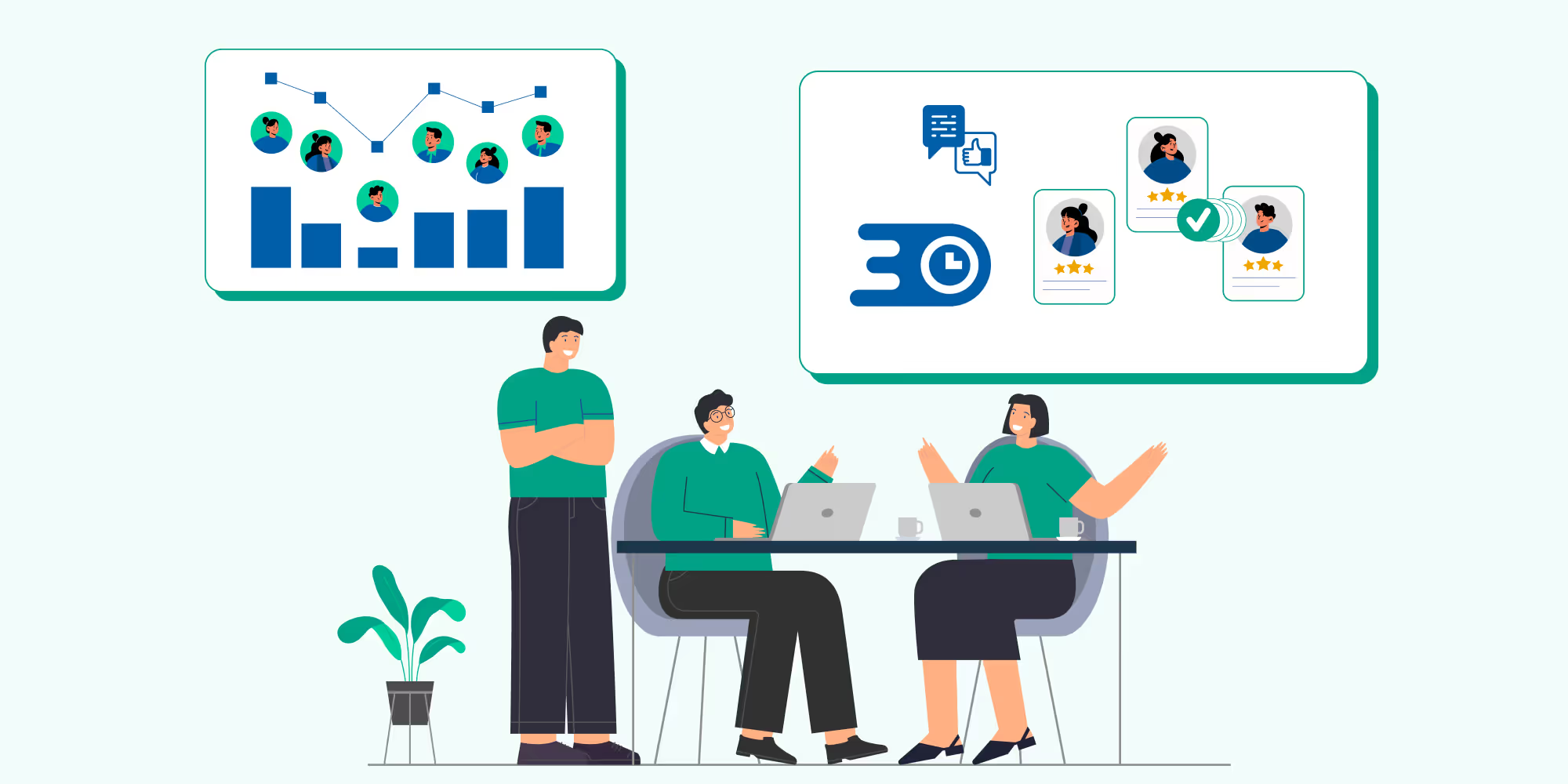
If you're still manually screening CVs, it's probably time for an upgrade. Because let's face it, hiring today isn't what it used to be.
The roles are evolving, the volume is exploding, and candidates expect a five-star experience. Meanwhile, your hiring team is juggling a dozen roles, 200+ applications, and a calendar full of interviews.
The solution? A recruitment-focused AI agent - your modern-day hiring copilot.
But how do you know if you're ready to bring one on board? Here's a practical checklist for hiring teams wondering if it's time to make the leap from traditional tools to AI agents in the recruitment process.
1. You're drowning in resumes, but still can't find "the one."
Applications are rolling in, but shortlisting feels like finding a needle in a haystack. A recruitment-focused AI agent doesn't just scan for keywords. It understands intent, matches against role-specific criteria, and highlights candidates who actually fit, not just those who claim to do so.
2. Your team is stuck in a loop of repetitive screening calls.
If you're asking "Tell me about yourself" for the hundredth time this week, you're not alone. AI agents can help automate the first round of interviews by asking the right questions, adapting follow-ups in real-time, and providing structured insights that you can actually use.
3. Time-to-hire is dragging, and top talent is slipping away.
Delayed decisions = lost candidates. An intelligent AI copilot for recruiters keeps things moving by instantly assessing, filtering, and routing the right candidates to the right people, so you don't miss out on high-quality talent.
4. Your team can't agree on what a "great candidate" looks like.
Hiring shouldn't depend on who interviews first (or who had more coffee). With an AI agent, interviews become standardized and unbiased, so you get consistent data across every candidate, every time.
5. Interview feedback disappears into thin air.
Or worse, it's scattered across email threads, Slack messages, and sticky notes. AI agents collect, summarize, and organize feedback instantly. Everyone stays on the same page, and decisions are made more efficiently.
6. You're hiring across different functions, but can't be everywhere at once.
You've got sales, tech, support, and marketing roles to fill, but only one hiring team. AI agents for hiring can be tailored to each role and run interviews in parallel, at scale. It's like having a whole team of specialists without increasing headcount.
7. You want to reduce bias, but don't know where to begin.
Everyone talks about fair hiring. But what does that look like? An AI copilot for recruiters helps level the playing field by scoring responses consistently and reducing unconscious bias in the early stages.
8. Candidates are ghosting you mid-process.
Lengthy delays and unclear communication can turn people off. An AI agent can instantly follow up with personalized updates, keep candidates in the loop, and ensure they know what to expect next, without you lifting a finger. It's a win for both the recruitment team and candidates.
9. Your hiring team is spending more time scheduling than assessing.
Coordinating calendars, chasing availability, sending reminders, and so on - it'll become a full-time job if you let it. AI recruitment tools with conversational intelligence can take over all of that. They schedule interviews, send nudges, and even reschedule when things change—no email tennis required.
10. Your candidate experience doesn't reflect your employer brand.
You've got a slick website and a strong EVP, but what about your hiring process? Still running on Google Forms. A conversational AI agent for hiring teams gives candidates an innovative, interactive, and respectful experience. It reflects your tech-savvy culture and leaves a lasting impression, even on those who may not be hired.
So, are you ready to upgrade?
If you nodded along to more than a few of these, it's time to meet your new hiring teammate: the AI recruitment agent.
Rather than replacing humans with AI, give your team a capable, tireless assistant who works 24/7 - screening, interviewing, and delivering rich candidate insights at speed.
Because hiring will always be human. But it doesn't have to be manual.

Conversational intelligence (CI) is slowly, but surely, changing how businesses communicate, and its influence will only grow in the coming years.
Let’s explore some use cases and future trends for conversational intelligence in business.
If you want an introduction to conversational intelligence, read our blog post here.
Customer support and experience automation
The most common use case for CI is customer service chats (on websites, apps, and messaging platforms). Here, conversational intelligence acts as a virtual customer assistant, resolving issues or answering questions. The future of business communication in this arena is leaning toward omnichannel, AI-assisted support. Already, 51% of consumers say they prefer interacting with bots for immediate service needs, which indicates a growing comfort with AI-driven help as long as it’s effective.
We also see AI digital agents bridging channels. For instance, a customer might start with a chatbot on a website and later get a follow-up from the same AI via WhatsApp or voice call, creating a seamless support journey.
Customer experience automation through conversational intelligence can cut costs and boost customer happiness by providing instant, accurate responses anytime, anywhere.
Sales and revenue generation
Sales teams are leveraging conversational intelligence in multiple ways. First, AI chatbots can engage website visitors in real time, qualifying leads, answering product questions, and even demoing products conversationally. This can improve lead capture and conversion rates by engaging prospects instantly rather than waiting for a sales rep’s availability.
Second, and perhaps more game-changing, is the use of conversation intelligence platforms to analyze sales calls and meetings. Imagine a meeting assistant with conversational intelligence that joins your Zoom sales call: It transcribes the meeting, analyzes the dialogue, and later provides you with a summary along with insights like “Customer reacted positively when pricing was discussed” or “Competitor X was mentioned twice.”
These insights help sales managers coach their teams and refine strategy. They also help reps themselves – some advanced systems can even coach in real time, nudging a rep if they’re doing too much talking or if they haven’t mentioned a key product feature yet.
According to industry trends, sales AI enablement tools like these are becoming standard; a recent report noted that 80% of sales reps say AI makes it easier to get the insights needed to close deals.
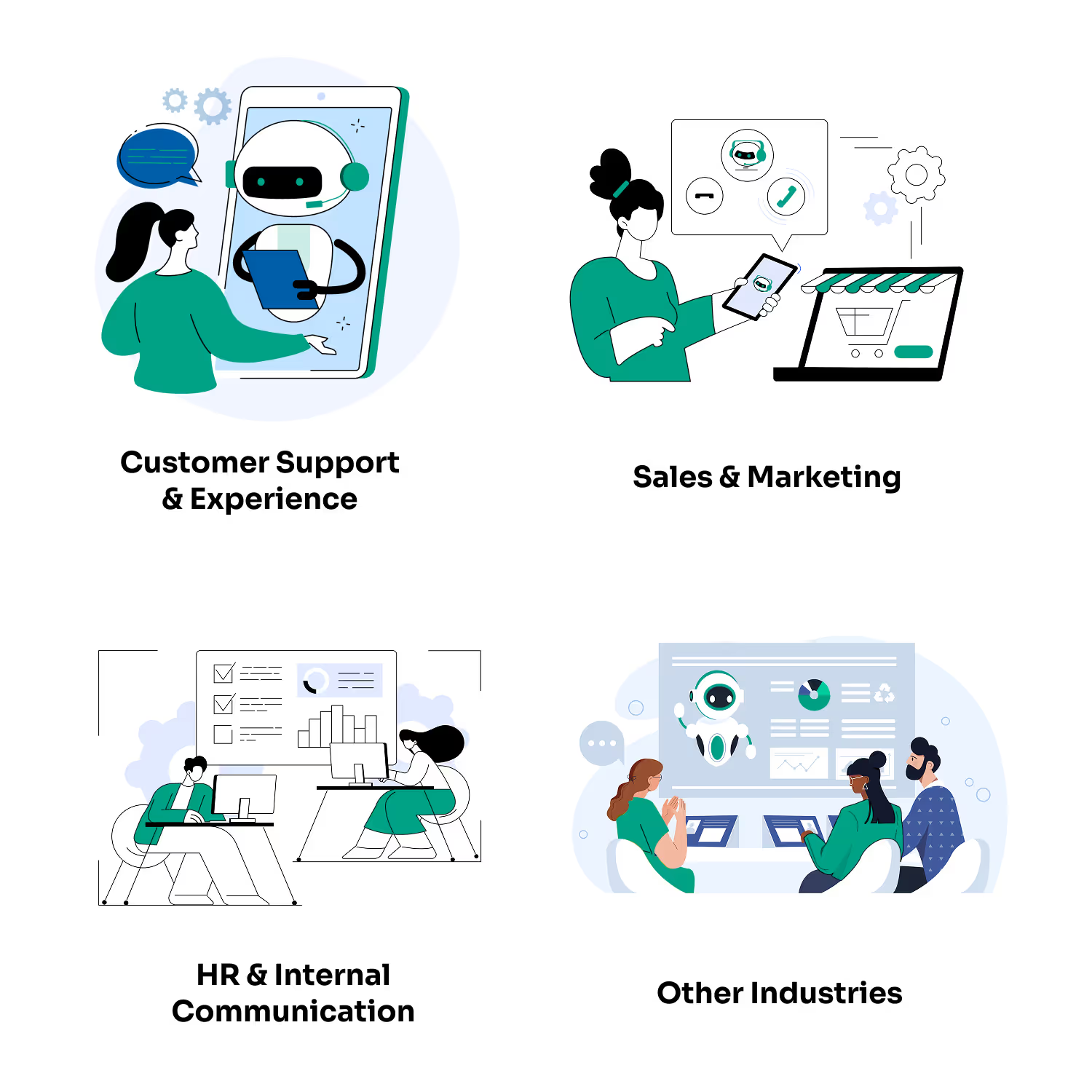
Marketing and personalization
Conversational intelligence is also making waves in marketing. AI chat agents on websites or social media can personalize product recommendations by analyzing what customers have browsed or purchased in previous sessions or visits. They can upsell or cross-sell with a conversational touch (“I see you bought a laptop - do you need a case for it?”).
Furthermore, conversational intelligence can be used for interactive marketing campaigns. For example, a beauty brand might have an AI chatbot that quizzes users and gives personalized skincare advice, creating an engaging experience that also drives product discovery.
These intelligent conversation software solutions blur the line between service and marketing, providing value to the customer while steering them through the marketing funnel.
Beyond marketing, AI-powered agents built on conversational intelligence are also transforming how enterprises approach market research and insights - especially in market research.
We expect to see more and more companies adopting this tech and conversational intelligence becoming a staple in the business communication trends of 2025 and beyond.
Internal communications and HR
Aside from using AI agents for hiring, enterprises are also applying conversational intelligence internally. HR chatbots (a type of conversational AI agent) can answer employees’ questions about benefits, company policy, or IT issues on Slack or other internal channels.
This improves employee experience by giving instant answers and freeing HR staff from repetitive queries. Meeting assistants (like Zoom’s AI assistant or Microsoft Teams’ Copilot) can live-transcribe meetings, highlight action items, and draft follow-up emails.
These AI meeting notes and insights mean employees don’t have to worry about scribbling notes and can focus on the discussion. The AI ensures nothing is lost, and everyone gets a summary after the meeting.
Different industries are customizing conversational intelligence to their needs.
There are countless benefits in adopting this tech, especially for enterprises. In healthcare, AI chatbots handle patient triage (“symptom checkers”) or help schedule appointments, improving accessibility.
Reports show that 58% of telemedicine platforms now use conversational interfaces to facilitate doctor-patient interactions. In finance, AI assistants help with account information and advise on basic financial questions.
In education, AI tutors or campus chatbots guide students. These specialized agents show that conversational intelligence isn’t one-size-fits-all – it can be trained on domain-specific knowledge (medical terms, financial regulations, etc.) to become an expert virtual assistant.
The trend points to more conversational intelligence platforms tailored for specific sectors (e.g., legal AI assistants, real-estate AI chatbots, etc.), which will further drive adoption because they can be deployed faster with industry context built in.
Can you think of a department in your company that could benefit from adopting conversational intelligence? If so, contact us!
Subscribe to The InterspectAI Blog