%201.svg)

What Students Learn About Themselves Through AI-Driven Interview Practice


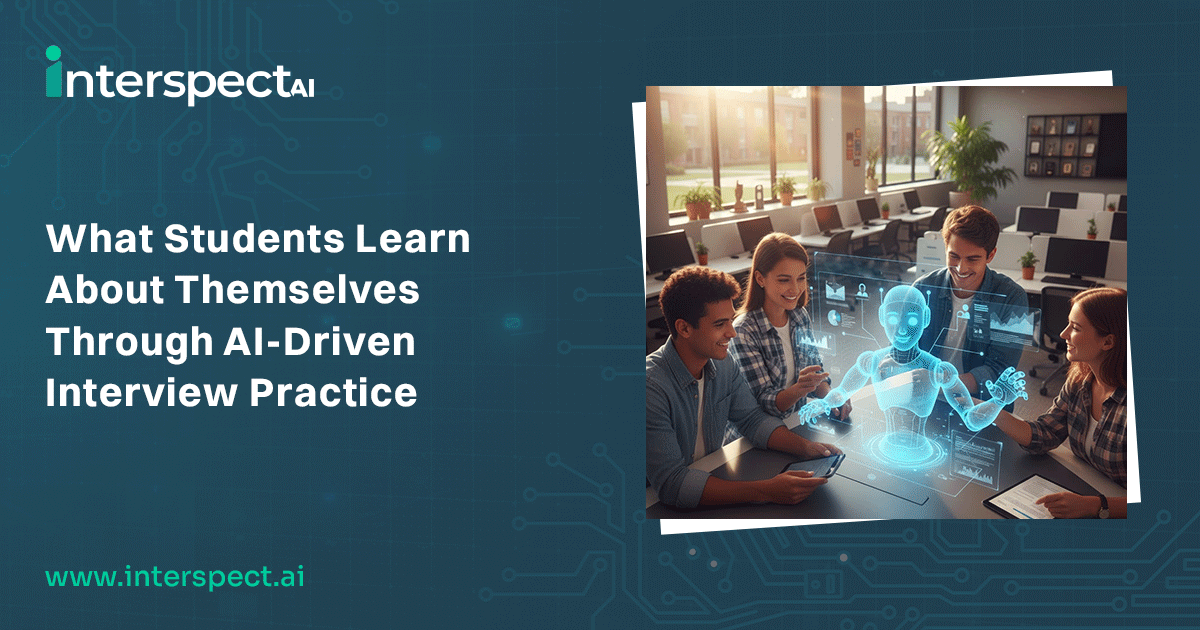
For many university students, the interview process feels like a black box. They submit an application, show up for a conversation, and then wait for a judgment that often comes without explanation. This lack of transparency breeds anxiety. Students often wonder if they talked too much, if their stories made sense, or if they truly sounded like themselves.
The introduction of AI interview coaching into career centers is changing this experience. While the technology is often sold on its efficiency, its profound impact lies in psychology. When students practice with an intelligent agent, they are not just rehearsing lines. They are engaging in a deep form of self-assessment. They hold up a digital mirror that reflects not just what they said, but how they came across. This objective feedback loop helps students dismantle self-limiting habits and discover a level of confidence-building that traditional practice rarely unlocks.
Uncovering Blind Spots in Communication
Most students have never heard themselves speak in a professional setting. They may believe they are being concise, while in reality, they are burying the lead under minutes of context. Or they may think they are being humble when they are actually failing to claim ownership of their achievements.
AI tools act as impartial observers. They provide immediate response insights that highlight these blind spots without judgment. A student might learn that they overuse tentative language when describing their technical skills, which undermines their technical proficiency. Or they might discover that their answers lack structure, leading to a low score in communication skills.
This realization is the first step in student development. It shifts the focus from "what does the recruiter want to hear?" to "how am I actually communicating?" By seeing a breakdown of their response structure, students learn to organize their thoughts logically. They realize that clarity is a skill they can control, not a trait they are born with.
The Psychological Safety to Fail
Fear of judgment is the primary barrier to effective practice. In a mock interview with a career counselor or a peer, students often stick to safe, rehearsed scripts because they do not want to look foolish. This prevents them from experimenting with new stories or bolder ways of presenting themselves.
An AI agent removes the social stakes. It does not judge, get bored, or form an opinion based on appearance. This creates a psychological safety net where students are free to fail. They can try answering a difficult behavioral question five different ways to see which one yields the highest interview readiness score.
Through this iterative process, students learn resilience. They discover that a bad answer is not a character flaw but simply a data point to be improved. This freedom allows them to find their authentic voice. They learn that they sound most confident not when they are reciting a perfect script, but when they are speaking naturally about experience areas they genuinely care about.
Aligning Personal Story with Professional Expectations
One of the hardest lessons for students is understanding how their unique background fits into a rigid job description. They often struggle to translate academic or extracurricular experiences into the language of the workplace.
Advanced AI platforms help students bridge this gap by analyzing role alignment. A student might think their experience running a university club is irrelevant to a corporate analyst role. However, the AI can highlight how that experience demonstrates leadership and budget management, aligning directly with the job requirements.
This teaches students to value their own history. They learn to view their diverse experiences as assets rather than footnotes. By seeing a concrete skills breakdown, they understand that they are more qualified than they realized. This shift in perspective is transformative. It turns the interview from a plea for employment into a negotiation of value.
InterspectAI: A Partner in Self-Discovery
While many tools provide simple transcripts, InterspectAI is designed to foster deep behavioral insight. Through SpectraSeek, the platform offers a sophisticated environment where students can explore their professional identity.
Here is how InterspectAI supports this journey of self-discovery:
- Measuring the Real You: SpectraSeek calculates an ‘Authenticity Score’ for every interaction. It flags generic, rehearsed answers and rewards genuine, specific storytelling. This teaches students that vulnerability and specificity are strengths, not weaknesses.
- Holistic Feedback: Instead of just correcting grammar, the platform evaluates ‘Overall Candidate Fit’. It looks at the synthesis of skills, experience, and delivery. This helps students understand the big picture of how employers perceive them.
- Targeted Skill Development: The system breaks down performance into granular metrics like ‘Technical Proficiency’ and ‘Communication Confidence’. A student can see exactly where they excel and where they need work, turning the vague goal of "getting better" into a manageable checklist of improvements.
- Safe Repetition: Students can practice unlimited times with domain-specific agents. This allows them to master the vocabulary of their field and build the muscle memory required to speak with authority.
Conclusion
The ultimate goal of AI in career services is not to create robotic interviewees, but to empower human ones. By providing a private, objective space for practice, these tools allow students to confront their insecurities and recognize their strengths.
When a student walks into a real interview, they should not be hoping for the right questions. They should be confident in their ability to give the right answers because they have already proven it to themselves.
Help your students find their voice. Give them the tool that turns practice into self-belief. Partner with InterspectAI today to bring SpectraSeek to your campus and empower the next generation of confident professionals.
FAQs
Q1: How does AI help students who are anxious about interviewing?
A: AI provides a safe, judgment-free environment for confidence building. By allowing students to practice repeatedly without the fear of embarrassment, it desensitizes them to the pressure of answering questions. This familiarity reduces anxiety and allows their true personality to shine through during real interviews.
Q2: Can AI really measure if a student is being authentic?
A: Yes. Advanced platforms like SpectraSeek use an ‘Authenticity Score’. This metric analyzes whether a student is using specific, personal examples and "I" statements, or if they are relying on generic clichés. This feedback encourages students to share their unique stories rather than rehearsed scripts.
Q3: What makes AI feedback different from peer feedback?
A: AI feedback is objective and data-driven. While a peer might say "that sounded good," an AI tool provides specific response Insights and a skills Breakdown. It highlights exactly which parts of the answer demonstrated competence and which parts were vague, ensuring students focus on measurable improvements.
Q4: Does practicing with AI help with technical interviews?
A: Absolutely. AI agents can be trained on specific industry knowledge. They assess technical proficiency by checking if the student used the correct terminology and logic for their field. This ensures that students are not just good communicators, but also competent subject matter experts.
You might also like
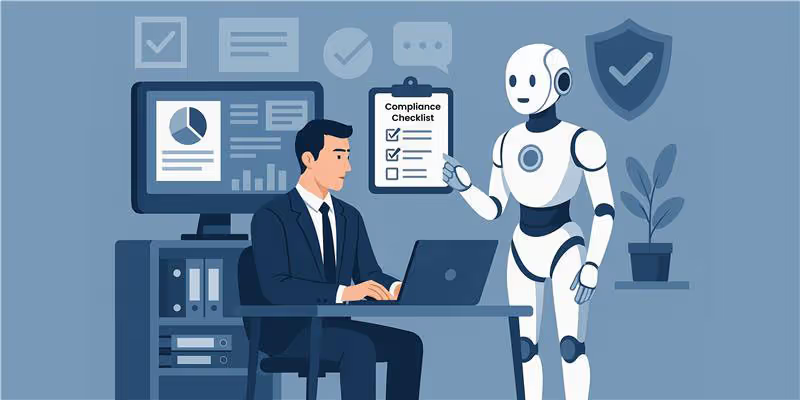

Ensuring regulatory and policy compliance is a heavy burden for enterprises. Compliance officers must regularly audit processes, verify controls, and chase down documentation – a process often involving endless questionnaires and interviews with staff.
It’s costly and labor-intensive - the average U.S. business allocates between 1.3% and 3.3% of total payroll just to stay compliant. And many compliance professionals are still in survival mode - nearly half (47%) say their primary goal is just finding simpler ways to deal with legal obligations. Only a small segment (around 16%) is able to focus on making compliance a strategic advantage.
But AI-powered interview/conversational agents can step in to lighten the load.
AI-driven compliance agents can conduct interactive audits continuously, instead of auditors doing annual check-ups. For instance, an AI interviewer could periodically “chat” with department heads and employees about compliance matters, asking the same kind of questions an auditor would - but in an automated, non-intrusive dialogue.
It might request proof of a safety check, quiz a manager on protocol knowledge, or walk an employee through an internal ethics checklist. All the responses and evidence are logged automatically for review.
Why automate with AI agents?
Efficiency and coverage
An AI agent acting as an auditor can be everywhere at once. It can autonomously sift through thousands of documents in minutes to check for compliance issues and simultaneously interview multiple teams about their procedures. This broad, rapid coverage means minor issues are caught early before they escalate. A job that might take a human audit team weeks (or be skipped due to time constraints) can be done continuously by autonomous AI agents.
And this matters more than ever as organizations nowadays are juggling six or more compliance frameworks, especially around data privacy and security. Over 59% of IT and security leaders report maintaining multiple compliance systems simultaneously. The complexity has grown - and so has the need for continuous monitoring.
Consistency and objectivity
The AI agent follows the same script and criteria every time, eliminating human error or bias. Every department and vendor get asked the full set of required questions, ensuring nothing slips through cracks. The result is a more standardized audit process that you can trust to be fair and thorough across the organization.
This standardized rigor is becoming expected. In fact, 70% of compliance professionals report a clear shift from "check-the-box" audits toward more strategic and structured compliance programs.
Reduced compliance fatigue
Because the AI-powered agent can handle routine check-ins, compliance teams are freed from a lot of tedious work. Instead of inundating employees with massive yearly surveys, the autonomous AI agent can spread out the queries into smaller, conversational check-ins. This feels less overwhelming for staff and maintains a constant compliance posture without “audit panic mode.”
No wonder 80% of compliance professionals say their departments are now seen as critical business advisory units, not just rule enforcers. There's increasing pressure to show real value, and tools that reduce friction help build that perception.
Real-time issue flagging
When an AI-powered interview agent uncovers a potential non-compliance, say an out-of-date certification or a policy misunderstanding, it can instantly alert compliance officers. This proactive monitoring helps enterprises fix problems before regulators or external auditors discover them. Considering that non-compliance can amplify breach costs by hundreds of thousands of dollars, catching issues early has tangible financial benefits.
Recent surveys show that 83% of compliance professionals see regulatory alignment as central to decision-making, and 76% say building an ethical compliance culture is a high-priority boardroom concern. Proactive tools that help flag and fix issues aren’t just helpful - they’re essential.
AI agents are all set to cut down the man-hours and costs to stay in line with regulations.
AI agents are all set to handle the repetitive Q&A and evidence gathering, while human experts focus on complex cases and remediation. The outcome is a stronger compliance culture with less stress.
Want to see how AI agents can take the load off for your team? Let’s talk.
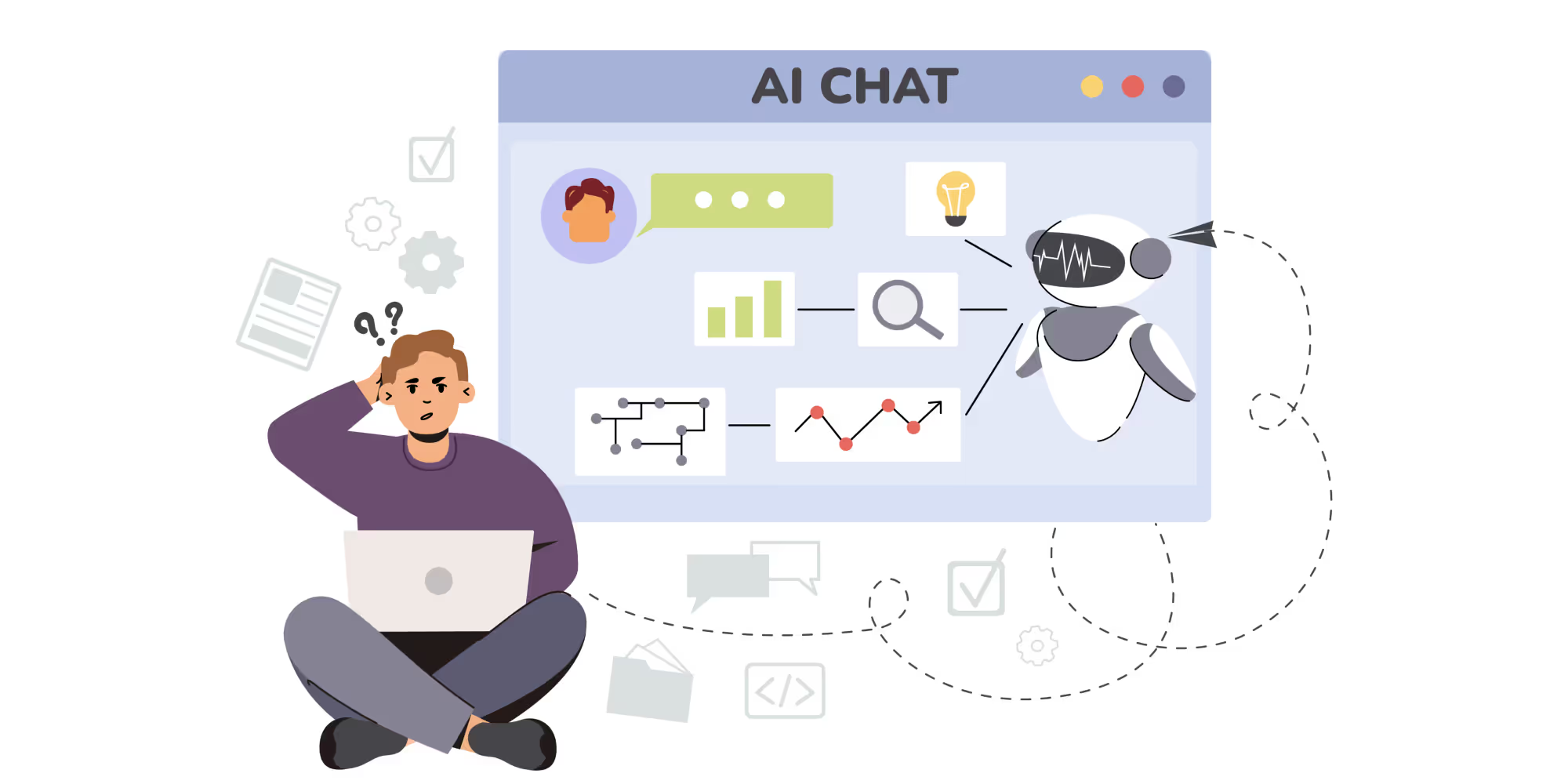
Conversation Intelligence (CI) has rapidly evolved from a niche technology into a critical business tool. In simple terms, CI software uses artificial intelligence to capture, transcribe, and analyze human conversations.
It turns the unstructured data from sales calls, customer interviews, and candidate screenings into structured, searchable insights. While the benefits sound appealing, many business leaders wonder about the right time to invest in the technology.
Investing in Conversation Intelligence becomes essential when the cost of not knowing what's being said in your business exceeds the cost of the software.
It is a strategic move to address growing complexity and unlock the valuable data currently trapped in fleeting conversations. Recognizing the signs that you have reached this tipping point is key to making a timely and impactful investment.
Trigger 1: When Your Data Becomes "Dark"
In the early days of a company, information flows freely. The CEO might personally interview every new hire, and the head of product likely speaks directly with the first ten customers. The insights from these conversations are easily shared and understood by the small team.
As the company scales, this becomes impossible. The volume of conversations grows exponentially. Suddenly, you have dozens of salespeople, recruiters, and support agents all having separate conversations every day.
This is when your data starts to go "dark." The valuable insights from these calls get trapped in individual notebooks, forgotten in CRM notes, or lost entirely.
You have no way to spot trends across all these conversations.
You cannot easily answer questions like, "What competitor is mentioned most often in our sales calls?" or "What is the most common feature request from our newest customers?"
When you realize that your company's most valuable intelligence is unstructured and inaccessible, it is a clear sign that you need a CI platform to bring it into the light.
Trigger 2: When Inconsistency Becomes a Major Risk
As teams grow, it becomes increasingly challenging to ensure a consistent process.
Your ten-person sales team might have ten different ways of pitching your product. Your hiring managers might be evaluating candidates based on wildly different criteria. This inconsistency is not only inefficient but also a significant business risk.
It leads to a confusing customer experience, poor hiring decisions, and potential compliance issues.
You may notice this problem when you see high variance in performance across a team, or when you struggle to onboard new employees effectively because there is no single "right way" of doing things.
Conversation Intelligence software addresses this directly. It allows you to analyze hundreds of conversations to identify what your top performers are doing differently. You can then use these insights to build standardized playbooks and training programs.
It provides a data-driven way to ensure that every customer interaction and every candidate interview is consistent, high-quality, and aligned with your company's goals.
Trigger 3: When You Need to Scale Your Teams Effectively
Hiring more people is the most common solution to a growing workload, but it is not always the most effective one.
Simply adding headcount without improving your processes can lead to diminishing returns. This is especially true in functions like recruiting and sales development. You cannot afford to have your most experienced (and expensive) employees spending all their time on repetitive, top-of-funnel tasks like initial candidate screenings or lead qualification calls.
The time to invest in CI is when you need to make your existing teams more productive, not just bigger. An AI-powered CI platform, such as SpectraHire, can automate many of these repetitive conversations. For example, it can handle the first round of interviews for a high-volume role, automatically assessing core skills and surfacing only the most qualified candidates for human review.
This frees up your senior team members to focus on high-value, strategic activities, such as closing deals or conducting final-round interviews. It allows you to scale your output without scaling your costs at the same rate.
Trigger 4: When You Need to Understand the "Why" Behind the "What"
Your business is likely already collecting a lot of quantitative data. You have web analytics, sales figures, and customer churn rates. This data tells you what is happening. It indicates that users are dropping off on a specific page or that a particular sales region is underperforming. What it often fails to tell you is why.
You should invest in Conversation Intelligence when you find yourself constantly guessing about the motivations behind your data.
A CI platform unlocks this qualitative insight at scale. By analyzing the actual conversations you have with customers and prospects, you can understand their frustrations, motivations, and unmet needs in their own words.
This allows you to move from making educated guesses to making truly data-informed decisions about your product, marketing, and overall business strategy.
Conclusion
At some point, every growing business hits a wall, where meaningful conversations start slipping through the cracks, and decisions are made with incomplete context. That’s where Conversation Intelligence comes in. It helps you capture the whole picture, spot patterns you’d otherwise miss, and make smarter, faster decisions. If you’ve started feeling that things are getting harder to track or scale, it might be time to let CI do some of the heavy lifting.
Scaling your team?
Let SpectraHire handle the first-round interviews, so your team can focus on the best-fit candidates.
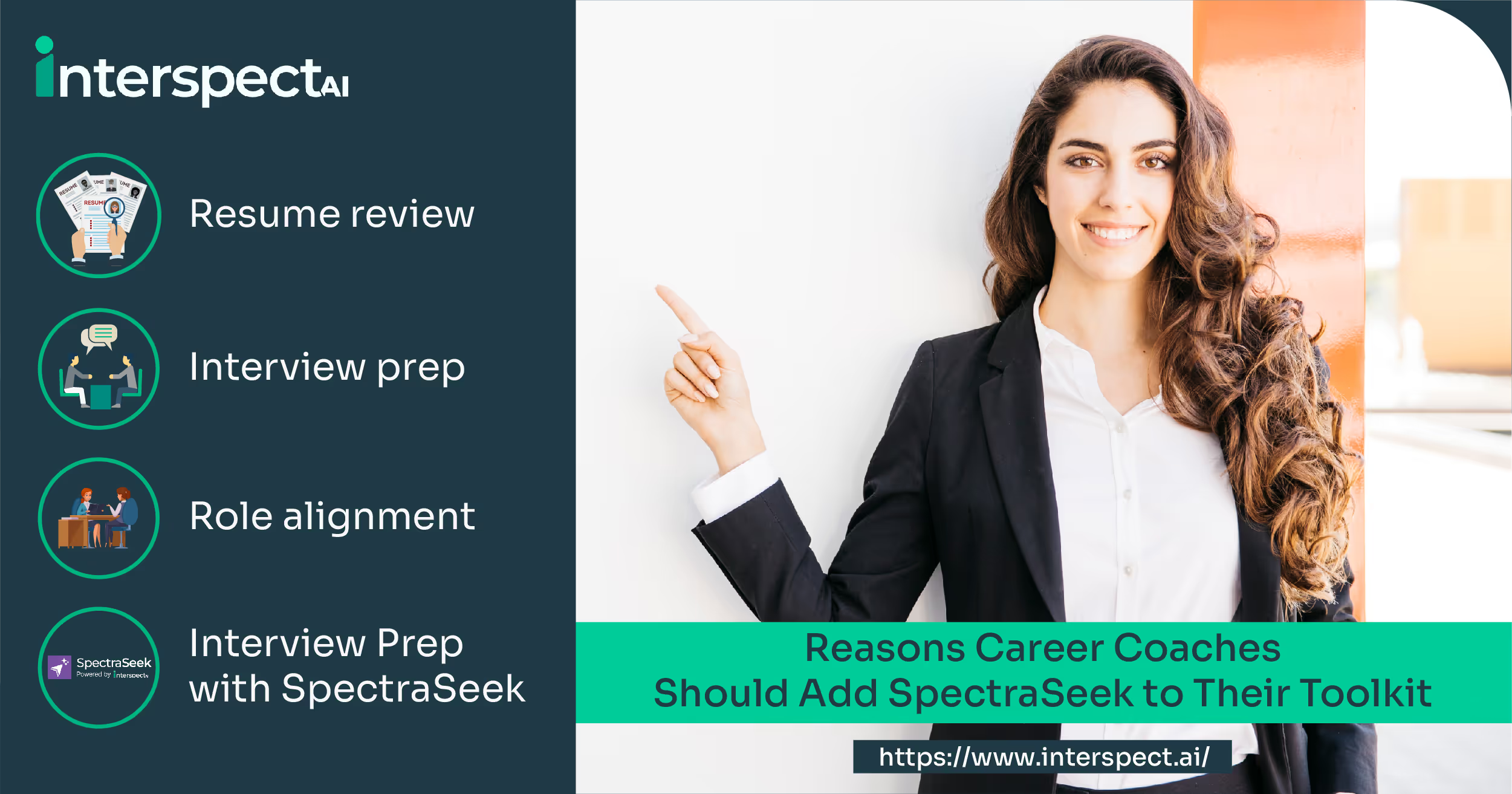
In today's competitive job market, clients are often overwhelmed by conflicting advice and demand clear, measurable results. For career coaches, demonstrating value goes beyond providing motivation; it requires quantifiable data to back up successful outcomes.
Traditional 1:1 coaching models face a structural limitation: every mock interview and basic feedback session consumes the coach's finite billable hours, limiting the ability to scale service and provide the high-volume practice high-stakes candidates require.
The solution is a hybrid, AI-human partnership. By adding SpectraSeek, InterspectAI's specialized, agentic AI-powered practice interview platform, to your toolkit, you can automate fundamental practice, boost client confidence, and elevate your role to a high-leverage strategic partner.
1. Shatter the Capacity Ceiling: Scaling Client Load
The most compelling reason to adopt AI is to overcome the physical constraints of time and provide the continuous, non-judgmental practice critical for skill mastery. SpectraSeek acts as a scalable practice engine that is available 24/7, enabling high-volume repetition that simply cannot be achieved in scheduled human sessions.
- Time Recapture (Operational ROI): By automating repetitive practice and basic delivery feedback, AI mock interviews handle the initial run-throughs and foundational errors. This automation can efficiently recapture a significant bulk of the time traditionally spent by a coach on these low-leverage activities.
- Accelerated Competency: The continuous, low-pressure environment provided by AI practice tools accelerates skill mastery and ensures the client achieves a confident baseline competence faster than relying solely on weekly human check-ins.
- Scalable Revenue Streams: Automating core preparatory components enables coaches to sustainably manage larger client rosters and introduce tiered coaching packages or subscription models. This approach generates passive revenue and shifts the business focus from billing time spent on practice to billing strategic insight delivered.
2. Precision Diagnostics: The Power of Objective Data
SpectraSeek removes the subjectivity from performance assessment, grounding the coaching conversation in undeniable, objective data that is difficult for a human to replicate during a live interaction.
- Data-Driven Personalization: The platform allows clients to upload their resume and the target job description. The AI uses this context to generate hyper-realistic interview questions tailored specifically to the role's requirements, moving far beyond generic Q&A scripts.
- Adaptive Flow and Instant Feedback: The system is engineered for seamless, high-impact prep. It uses "smart follow-up questions" and dynamically adjusts its inquiries based on the client's previous responses, accurately simulating the nuanced experience of a human interviewer. Critically, it delivers instant, tailored feedback, including improved sample responses based on proven frameworks like the STAR method.
- Quantified Performance Metrics: Clients receive instant analysis on their delivery—including automated scoring across key technical and behavioural metrics, such as structure of response, relevance of examples, and clarity of articulation.
- Trust and Security: The SpectraSeek platform is built with enterprise-grade security in mind: end-to-end encryption, compliance with SOC 2 Type 2, GDPR, CCPA and HIPAA standards, and configurable data‐outputs (JSON) designed for safe integration.
3. The Hybrid Advantage: Maximizing Human Impact
The adoption of SpectraSeek elevates the coach to a strategic translator of data, not a subjective assessor. This hybrid model—AI for data, human for empathy—is the most effective path forward.
- Surgical Intervention: By reviewing the AI-generated performance reports before a live session, the human coach enters the room with a clear, data-backed diagnosis of the client's weaknesses. This allows the session to be dedicated exclusively to high-leverage activities—such as advanced negotiation strategies, cultural fit discussions, or overcoming psychological barriers—where human empathy and intuition are indispensable.
- Strategic Translator: The coach's premium value lies in their ability to interpret objective performance data (e.g., “Why did the relevance and clarity scores dip during the conflict resolution question?”) and translate those insights into empathetic, behavior-focused strategies. This ensures that human interaction remains centered on the most critical and transformative aspects of the client’s development journey.
- Accountability and Confidence: When clients see objective data detailing their performance, they are less likely to dismiss feedback as subjective criticism, fostering accountability and reinforcing their commitment to the necessary corrective practice.
Ready to Transform Your Interview Workflows?
The future of coaching requires the integration of technology to deliver scalable, objective, and high-impact results. Stop sacrificing strategic time for repetitive practice.
Request a Demo of the SpectraSeek today to integrate 24/7, data-driven preparation into your coaching methodology, boost client confidence, and unlock the next level of profitability and impact for your practice.
Frequently Asked Questions (FAQs)
Q: How does SpectraSeek help me scale my practice and increase my business capacity?
SpectraSeek automates repetitive tasks like mock interviews and basic delivery analysis, potentially saving the coach a significant bulk of time previously spent on initial practice rounds. This allows you to sustainably manage a larger client roster and focus your billable hours on high-value, strategic interventions.
Q: Does using an AI practice tool reduce the need for a human coach?
No, AI tools augment, not replace, the human coach's role. SpectraSeek provides the data and repetition; the human coach interprets that data, addresses complex psychological barriers (e.g., anxiety), and focuses on nuanced strategic elements like negotiation and emotional alignment—areas where human empathy and judgment are essential.
Q: How is the practice personalized for each client and target role?
Clients can upload their resume and the specific job description, enabling the AI to generate hyper-realistic interview questions tailored exactly to the role's requirements. Furthermore, the system uses an adaptive flow, posing context-aware follow-up questions that mirror a genuine human interview experience.
Subscribe to The InterspectAI Blog