%201.svg)

How to Make Your LinkedIn Headline Irresistible in 2025



Your LinkedIn headline is the single most visible part of your profile. It appears in search results, connection requests, comments, and even recruiter dashboards. It decides whether someone clicks to learn more or scrolls past.
Data shows the impact: Optimized LinkedIn profiles get 40× more opportunities than the unoptimized ones and completed profiles gain 21× more views than the incomplete ones. A good headline alone can increase your visibility by 30%.
That’s why in 2025, when competition for attention is at its peak, headlines need to be sharp, keyword-rich, and value-driven.
5 Core Elements of an Irresistible Headline
1. State your professional identity clearly
People should instantly know who you are. Titles like “Project Manager” or “Software Engineer” set the base. But don’t stop there—add context.
Example:
Instead of “Marketing Manager,” try “Marketing Manager | B2B SaaS Growth & Demand Gen.”
Why this works: Recruiters often search using combinations like “Marketing + SaaS” or “Project + Agile.” Adding specifics makes you appear in more searches.
2. Use keywords strategically
LinkedIn functions like a search engine. Recruiters type keywords into the search bar to find candidates. If your headline doesn’t include those terms, you won’t show up - even if you’re the perfect fit.
Profiles with skills listed get more recruiter messages. The same logic applies to headlines.
How to find your keywords:
- Look at 5–10 job descriptions in your field.
- Note recurring skills or tools (e.g., “Python,” “Leadership,” “Data Analytics”).
- Weave them into your headline naturally.
3. Focus on value, not just job titles
Titles tell people what you are. Value tells them why you matter. A recruiter or client doesn’t just want to know your role—they want to know what you can deliver.
Example:
- Title-only: “HR Consultant”
- Value-driven: “HR Consultant | Cutting Employee Turnover by 40% Through Data-Driven People Strategies”
See the difference? The second version tells me why I should click your profile.
4. Add achievements or metrics
Numbers cut through noise. If you can quantify results, you instantly become more credible.
Example:
- Weak: “Sales Manager | SaaS”
- Strong: “Sales Manager | SaaS | Grew ARR from $2M to $5M in 12 Months”
Recruiters scan hundreds of profiles daily. Metrics make yours memorable.
5. Infuse personality (when relevant)
LinkedIn isn’t just about what you do, but also how you do it. Personality helps you stand out, especially in creative or people-focused industries.
Example:
- Traditional: “Chief People Officer | HR Strategy & Engagement”
- Memorable: “Chief People Officer | Building Workplaces People Actually Love”
Not every industry needs this. If you’re a compliance officer, playful language may not fit. But for marketers, consultants, or founders, it works well.
A Practical Formula for Writing Your Headline
Here’s a simple template you can adapt:
[Job Title] | [Core Skill/Keyword] | [Value/Impact or Achievement] | [Optional: Personal Brand/Passion]
Example:
Product Manager | AI & SaaS Platforms | Driving 30% Faster Time-to-Market | Advocating Inclusive Tech
This structure ensures your headline is both searchable and human.
Real examples that perform well
Notice how each one goes beyond just listing a job title. They either show results, solve problems, or highlight uniqueness.
Why being active on LinkedIn amplifies your headline
Even the best headline won’t work in isolation. LinkedIn rewards active members—those who post, comment, and engage.
A recruiter recently shared how she wasn’t job hunting but landed a contract with Apple simply because her optimized profile (and headline) kept her visible in searches.
In short - update your headline, but also stay active so the algorithm keeps pushing your profile forward.
Your headline is the single most important line on your LinkedIn profile.
To make it irresistible in 2025:
- State your identity clearly
- Use targeted keywords
- Show your value
- Highlight achievements
- Add personality where it fits
Get this right, and you won’t just be visible - you’ll be unforgettable.
And if you’re polishing your profile, don’t forget the next step - sharpening your interview game! That’s where SpectraSeek, our AI-powered interview prep tool, helps you practice and perform with confidence!
You might also like

The software industry stands at a profound inflection point. After decades of Software-as-a-Service (SaaS) transforming how we access applications, we're witnessing the emergence of something fundamentally different: agentic systems. This represents a paradigmatic shift toward intelligent, autonomous systems that can reason, plan, and act independently.
While SaaS helped us move from legacy applications to cloud-based services, agentic systems are transforming software behavior from reactive tools to proactive collaborators. Understanding this transition is crucial for technology leaders, as it will reshape how organizations interact with software systems in the coming decade.
Defining the Agentic Paradigm
Agentic systems represent a fundamental reimagining of software architecture and behavior. Unlike traditional applications that execute predetermined workflows, agentic systems can perceive their environment, formulate plans based on context, and perform autonomous actions to achieve specified objectives.
The recent research on vertical AI agents reveals that these systems derive their power from the sophisticated integration of multiple cognitive capabilities. At their core, they combine Large Language Models (LLMs) with specialized architectural patterns that enable genuinely intelligent behavior across diverse domains.
Central to this paradigm is the Cognitive Skills Module—purpose-built components that incorporate domain-specific knowledge and reasoning capabilities. This represents a departure from generic AI models toward specialized intelligence tailored for specific industries and organizational contexts.
The Limitations Traditional SaaS Couldn't Solve
Traditional SaaS platforms, despite their revolutionary impact, operate within constraints that have become increasingly apparent.
- Workflow Rigidity: Most SaaS applications impose predetermined workflows that require users to adapt their processes to fit software constraints, creating cognitive overhead and reducing efficiency.
- Integration Fragmentation: While modern SaaS platforms offer APIs, connecting multiple systems remains technically complex. Each integration point introduces potential failure modes, and changes in one system can cascade through interconnected workflows.
- Context Switching Overhead: Knowledge workers utilize 10-15 different SaaS applications daily, constantly switching between interfaces and manually transferring context. This fragmentation reduces cognitive efficiency and increases error rates.
- Limited Adaptability: Traditional SaaS solutions provide standardized solutions that cannot be meaningfully adapted to individual cognitive patterns, organizational cultures, or unique operational requirements.
- Reactive Architecture: Current SaaS systems require explicit user initiation for every action. They cannot proactively identify emerging issues, suggest optimizations, or autonomously execute improvements.
How Agentic Systems Transcend These Challenges
Agentic systems fundamentally invert the traditional human-software relationship, creating truly collaborative partnerships.
Adaptive Workflow Intelligence
Rather than imposing rigid processes, agentic systems understand user intent and dynamically determine optimal pathways to achieve desired outcomes. They can recognize when standard procedures should be modified based on context or evolving requirements.
Seamless System Orchestration
Agentic systems excel at understanding relationships between disparate data sources and tools, automatically coordinating actions across multiple platforms without requiring explicit integration work.
Persistent Contextual Memory
These systems maintain comprehensive awareness of user preferences, project histories, and organizational goals. This persistent context enables informed decision-making that considers both immediate requirements and broader strategic objectives.
Autonomous Problem Resolution
Agentic systems can identify potential issues before they manifest, evaluate alternative solutions, and implement corrective actions without requiring human intervention.
Architectural Innovations
The technical architecture of agentic systems represents a fundamental departure from traditional software design. These systems employ sophisticated multi-agent frameworks that distribute intelligence across specialized components.
- Planning and Strategy Modules enable systems to break down complex objectives into manageable subtasks and develop effective execution strategies.
- Multi-Layered Memory Systems incorporate both short-term working memory for active tasks and long-term episodic memory for learned experiences and domain knowledge.
- Dynamic Tool Integration features adaptive frameworks that can discover and utilize the most suitable tools based on the current task requirements.
- Reflective Learning Mechanisms continuously analyze performance and adjust behavior based on outcomes and feedback.
The Cognitive Skills Module: Industry-Specific Intelligence
One of the most significant innovations is the development of Cognitive Skills Modules—specialized components that incorporate deep domain knowledge and industry-specific reasoning capabilities.
These modules encode the reasoning patterns, best practices, and contextual understanding that domain experts develop through experience. In healthcare, they understand clinical decision-making processes. In finance, they comprehend market dynamics and risk assessment methodologies.
This specialization enables agentic systems to operate with nuanced judgment while maintaining the consistency and scalability advantages of software systems.
Beyond Context-Awareness to Contextual Intelligence
Agentic systems represent a quantum leap beyond traditional context-aware computing. They don't merely sense environmental parameters; they comprehend complex situational factors, understand user intent within broader contexts, and reason about optimal actions given competing priorities.
This enhanced contextual intelligence enables agentic systems to operate more like knowledgeable colleagues than traditional software tools. They can interpret ambiguous requests, make reasonable assumptions, and take appropriate actions even when instructions are incomplete or unclear.
Industry Transformation Patterns
Agentic systems are demonstrating transformative potential across multiple industries.
- In healthcare, they continuously monitor patient data, coordinate care protocols, and ensure regulatory compliance while adapting to individual patient needs.
- In financial services, they perform real-time risk assessment, detect fraudulent patterns, and ensure regulatory compliance across different jurisdictions.
- In manufacturing, they optimize production schedules, predict maintenance requirements, and coordinate supply chain logistics with minimal human intervention.
Economic Implications
The shift represents an economic transformation that could fundamentally alter industry structures. Traditional per-user subscription models may evolve toward outcome-based pricing, where organizations pay for results achieved rather than software access.
Agentic systems also address "SaaS sprawl"—by providing intelligent orchestration across multiple functions, fewer agentic systems could replace numerous single-purpose applications.
Technical Challenges
The transition introduces complex challenges. Trust and reliability become paramount when systems can take autonomous actions affecting business outcomes. Explainability and auditability present significant challenges when dealing with complex decision-making systems. Data privacy and security concerns intensify when intelligent systems have broader access to organizational resources.
Pioneering the Agentic Transformation
At InterspectAI, we've been at the forefront of this transformation, building conversational intelligence platforms powered by agentic AI that reimagine organizational interviews across hiring, research, and compliance. Led by our team, including Dr. Fouad Bousetouane, recognized as one of the "Top 30 AI Scientists" and a lecturer in Generative AI at the University of Chicago, we've pioneered the integration of Cognitive Skills Modules that incorporate domain-specific knowledge. Our real-world deployments have demonstrated how agentic systems transform workflows from reactive processes to proactive, intelligent collaborations.
The Future is Agentic
The evolution from SaaS to agentic systems represents a fundamental shift toward intelligent partners capable of understanding objectives, making decisions, and taking autonomous actions. This transformation will reshape industries, create competitive advantages, and necessitate the development of new capabilities for organizations to work effectively with intelligent systems.
As we stand at this pivotal moment, understanding agentic systems becomes increasingly crucial for technology leaders and business strategists. The organizations that successfully navigate this transition will gain significant advantages in an increasingly AI-driven world.
The age of truly autonomous software is beginning. The question isn't whether this transformation will occur, but how quickly organizations can adapt to this new paradigm of human-software collaboration. The future of software is agentic, and that future is arriving faster than most realize.
FAQs
1. What distinguishes agentic systems from traditional SaaS platforms?
Agentic systems extend beyond SaaS by autonomously perceiving context, formulating plans, and executing actions without explicit user commands. While SaaS delivers cloud-based services through predefined workflows, agentic systems adapt to evolving situations and proactively collaborate to achieve goals.
2. How do Cognitive Skills Modules enhance agentic system performance?
Cognitive Skills Modules embed domain-specific knowledge and reasoning patterns into agentic architectures. These specialized components enable systems to apply expert-level judgment such as clinical decision protocols in healthcare or risk assessment methodologies in finance, ensuring more accurate, contextually appropriate actions.
3. In which industries are agentic systems already making an impact?
Agentic systems are transforming multiple sectors: in healthcare, they continuously monitor patient data and coordinate care; in financial services, they perform real-time risk assessment and fraud detection; in manufacturing, they optimize production schedules and supply chains; and in professional services, they assist with research, compliance, and strategic recommendations.
4. What challenges should organizations anticipate when adopting agentic systems?
Key challenges include establishing trust and governance to oversee autonomous actions, ensuring explainability for complex decision-making processes, and addressing heightened concerns regarding data privacy and security. Organizations must also develop new skills in agent orchestration, outcome specification, and performance monitoring to fully leverage agentic capabilities.
Feedback is essential in the workplace… but also complicated. While constructive criticism is crucial for growth, many employees fear it.
Managers, too, often struggle with delivering it effectively. But what if you could get honest, unbiased, and actionable feedback without judgment, awkwardness, or fear?
That’s exactly what internal coaching via AI interview agents makes possible.
Why traditional coaching will benefit from an upgrade
Coaching, when done right, transforms performance. But in reality, most organizations face two key challenges:
- Inconsistency in delivery - Not all managers are great coaches. Some over-criticize; others avoid giving feedback altogether.
- Feedback anxiety - Employees often hesitate to open up in real-time sessions due to fear of judgment, bias, or repercussions.
Traditional coaching methods, while valuable, often lack the data, consistency, and neutrality needed to create psychological safety. That’s where agent-based video interviews come into play.
Why AI interview agents are a new and improved way to coach internally
Imagine a tool that not only listens and evaluates but also learns from every interaction. Welcome to the world of interview agents powered by AI.
These are not your standard bots. They’re advanced conversational AI for interviews, trained on domain-specific data to ask the right questions, capture nuanced responses, and offer real-time qualitative feedback - without making the employee feel "watched."
Here’s what makes this shift so powerful:
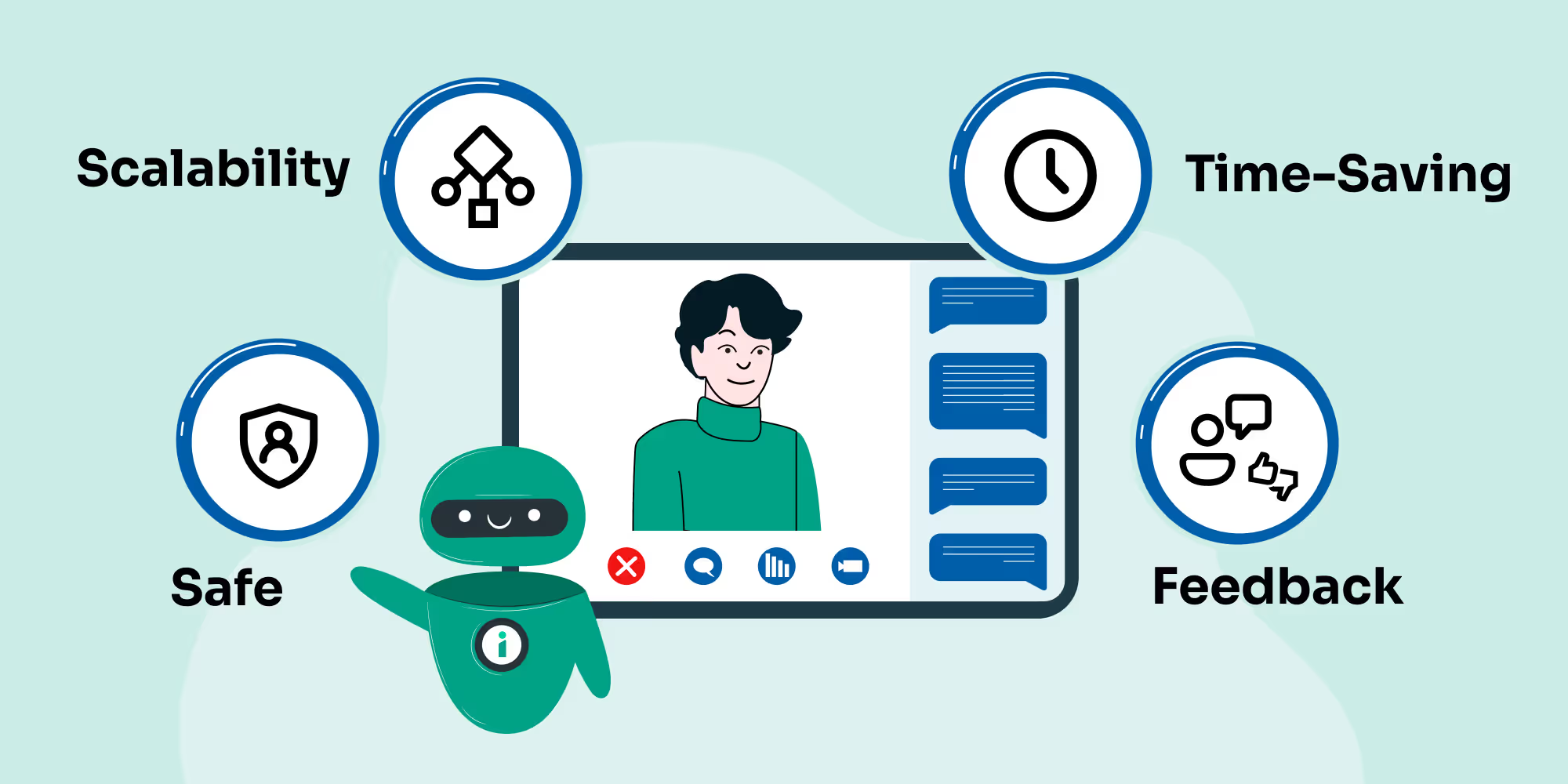
Safe environment - Employees are more candid with AI. A study by Oracle and Workplace Intelligence found that 82% of people believe robots can support their mental health better than humans.
Scalability - An AI interview agent can run hundreds of coaching sessions simultaneously, something no team of human coaches can manage.
Consistency - No human bias, no bad day moods. Just clear, data-backed feedback.
This is where agentic AI-powered interviews are making things easier, not just in hiring but in employee skill development too.
How internal coaching works using agentic AI
Here’s a simple workflow,
Customized AI agent creation - Enterprises build custom AI agents for qualitative insights based on role, level, and goals.
Automated video interview sessions - Employees engage in automated video interview tools designed for coaching, not evaluation.
Conversational intelligence in action - The agent uses conversational intelligence to interpret tone, context, and sentiment, producing a feedback report.
Actionable insights - Employees get instant feedback on communication skills, confidence, clarity, and knowledge gaps, no human filter.
This is agentic AI for human conversations powered by conversational intelligence at its best.
What are the real benefits of adopting AI agents for internal interviews?
No fear feedback - Employees respond more openly to machines than managers when it comes to sensitive performance topics.
Time-saving for leaders - Coaching isn’t scalable when it depends on people. AI agents scale it effortlessly.
Data-backed coaching - Employees can track their progress across sessions with tangible data, something a manager might miss.
In fact, there are use cases for AI interview agents across the enterprise
Leadership grooming - Coach mid-level managers on situational responses.
Sales enablement - Run pitch practice sessions with real-time conversational feedback.
Customer support - Train teams to handle difficult conversations with empathy and clarity.
It’s time to coach differently. And it starts with the right questions - asked by the right agents.
Ready to see this in action for your team? Let’s talk.
.avif)
Even with the best resumes shortlisted and smoothest interviews, recruitment can feel like a gamble.
But what if the interview itself could do more than just help you pick someone… what if it could help you predict how well they'll perform?
That’s exactly what the smartest companies are starting to do using AI agents. More than just assessing candidates, they're extracting data from interviews to forecast performance, retention, and even future growth.
And the results are surprisingly accurate.
Let’s break it down.
What is “interview data,” really?
Interview data isn’t just about scores or gut feelings. It includes measurable, structured signals such as:
- How clearly a candidate answers questions
- How they structure their thinking
- Behavorial traits (confidence, humility, collaboration)
- Speech patterns, word choice, and tone
- Time taken to respond
- Relevance of examples
- Consistency with resume or application
- Real-time reactions to follow-ups
And when interviews are run through conversational AI or video-based platforms, these signals can be quantified and analyzed, objectively.
Why interview data matters more than ever
Resumes might lie, references are often biased, and a 45-minute conversation isn’t always enough to gauge long-term success.
But data doesn’t lie. And with the right systems in place, interview data can reveal patterns that correlate directly with outcomes like:
- Job performance
- Cultural alignment
- Training needs
- Leadership potential
- Likelihood to stay
In fact, a study found that structured interviews that capture and score behavorial data were twice as effective at predicting performance compared to unstructured interviews.
How AI helps in getting this goldmine
Most hiring managers aren’t sitting there scoring body language or linguistic complexity in real-time. And they shouldn’t have to.
AI-powered interview platforms can automatically:
- Transcribe and analyze every interview
- Score responses for clarity, structure, and relevance
- Identify soft skills using natural language processing
- Compare candidates to top performer benchmarks
- Highlight red flags (like evasiveness or inconsistency)
The goal isn’t to replace humans. It’s to help them make better, more consistent decisions using deeper, unbiased insight.
What this looks like in practice
Let’s say you’re hiring for a customer success role.
You use a platform like SpectraHire that runs interviews with conversational intelligence. Each candidate is asked the same (or similar, depending on the settings that the recruiter set) of structured questions.
Here’s what you’re able to extract from the interview data:
- Empathy & communication - Does the candidate use inclusive language? Do they address the customer’s feelings before jumping to a solution?
- Problem-solving - Are they giving specific, logical responses, or vague answers with buzzwords?
- Coachability - How do they respond to follow-up questions or nudges?
Once hired, these same markers are tracked alongside real performance data, building a feedback loop that makes your future interviews even better at predicting success.
It’s not magic. It’s just data meeting context.
Benefits of using interview data this way
.avif)
1. Fewer wrong hires
When interviews are scored against what actually leads to success in a role, hiring becomes less subjective, and less risky.
2. Faster onboarding
If interview data reveals someone needs support with certain skills, you can build that into their first 30-60-90 day plan.
3. Better internal mobility
Once you know the behavioral traits that lead to success in each role, you can use interview data to place internal talent more effectively.
4. Improved DEI outcomes
By analyzing patterns across interviews, you can spot and address hidden bias or systemic issues in your hiring funnel.
But, does it really work?
Yes. When done right.
According to a report from McKinsey, companies that use people analytics to inform talent decisions are more likely to outperform their competitors in productivity, employee satisfaction, and retention.
And interview data - especially from structured, repeatable formats - is one of the richest sources of that insight.
What’s the bottom line?
We’re moving from “Who impressed us in the interview?” to “Who showed the signals that predict success in this role, in this environment?”
Interview data, when captured and used ethically, allows small teams to hire like enterprise giants, and lets big companies scale human decisions without losing the nuance.
And SpectraHire is making this possible for companies of all sizes.
Subscribe to The InterspectAI Blog